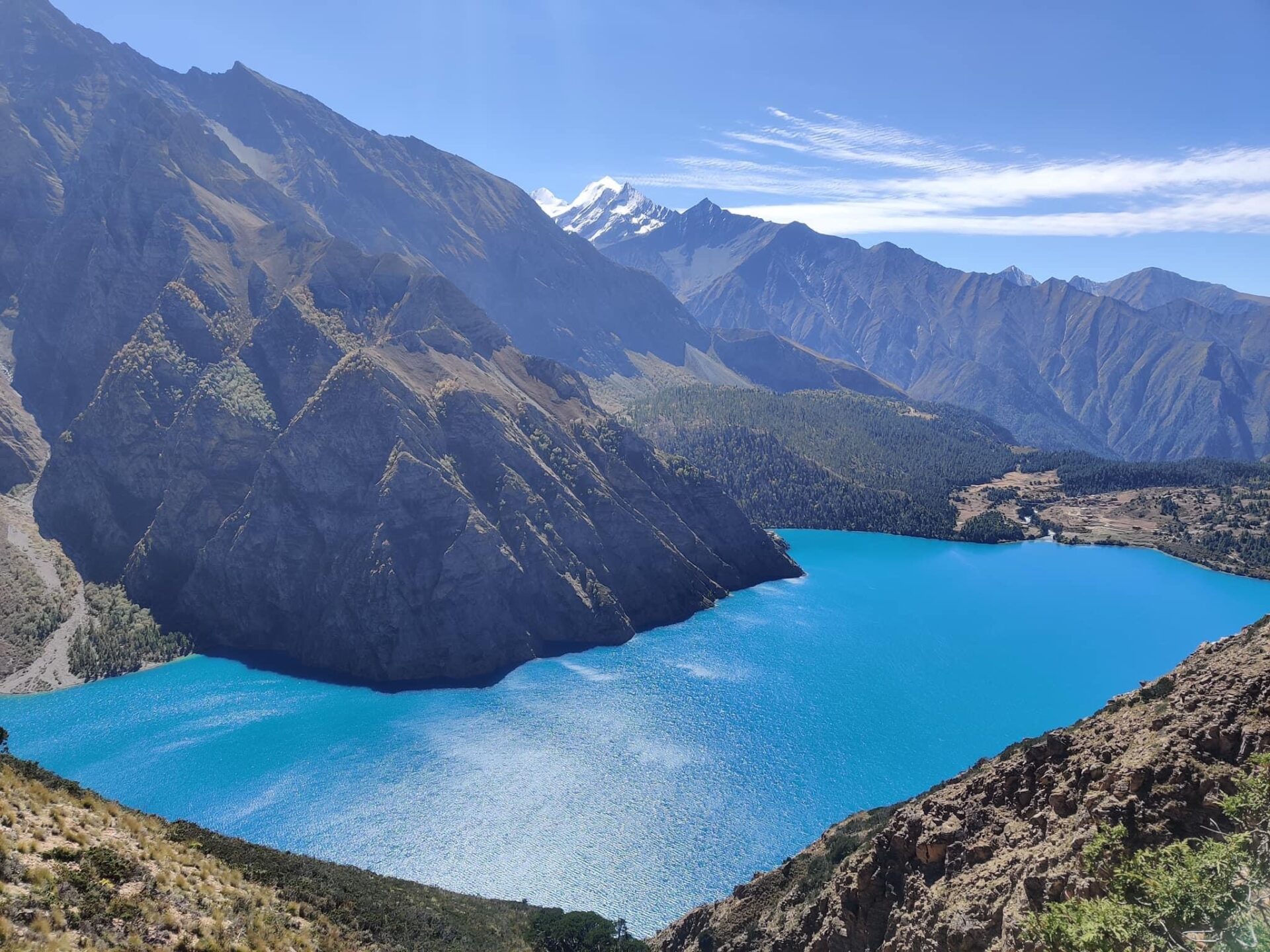
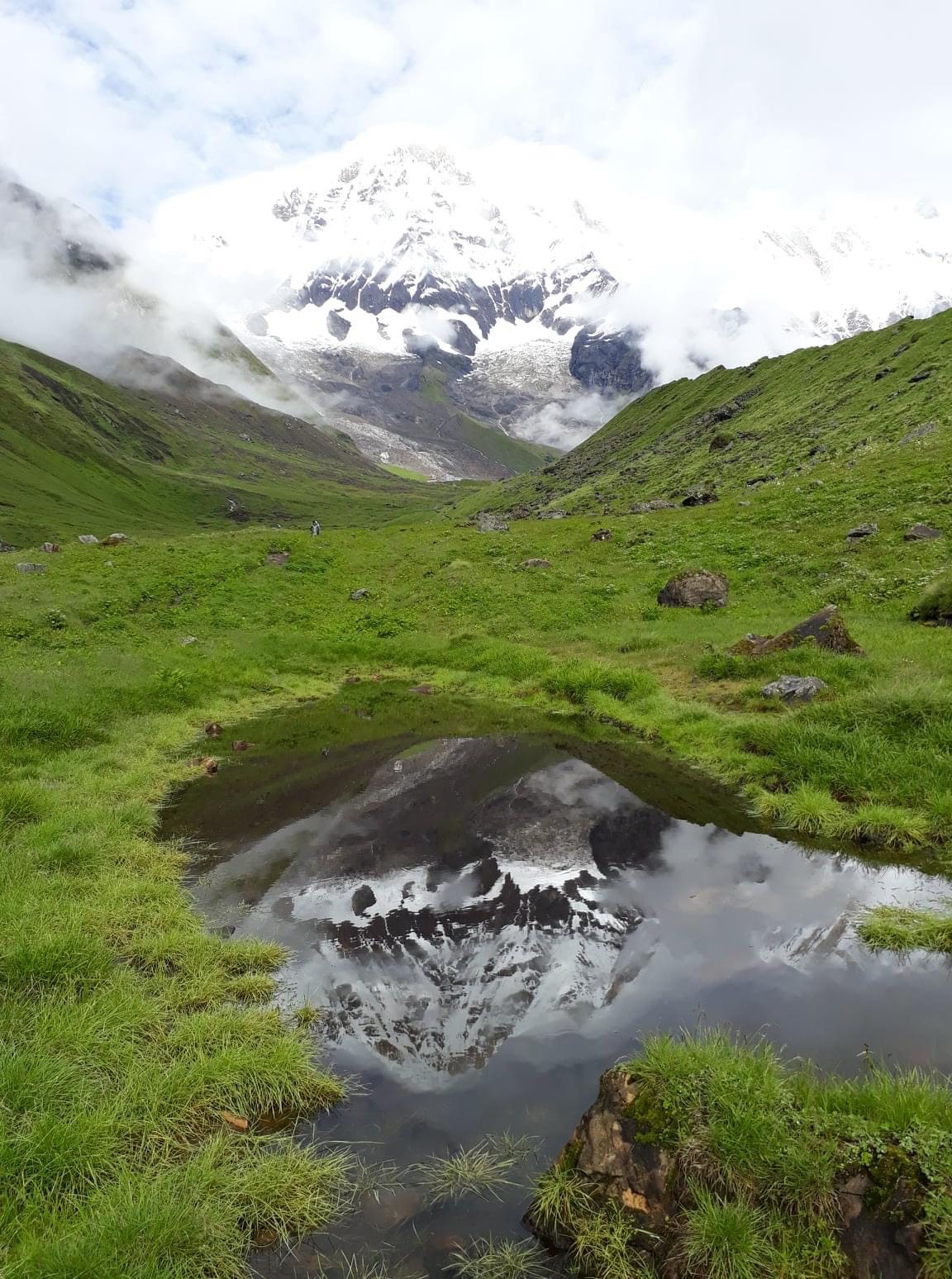
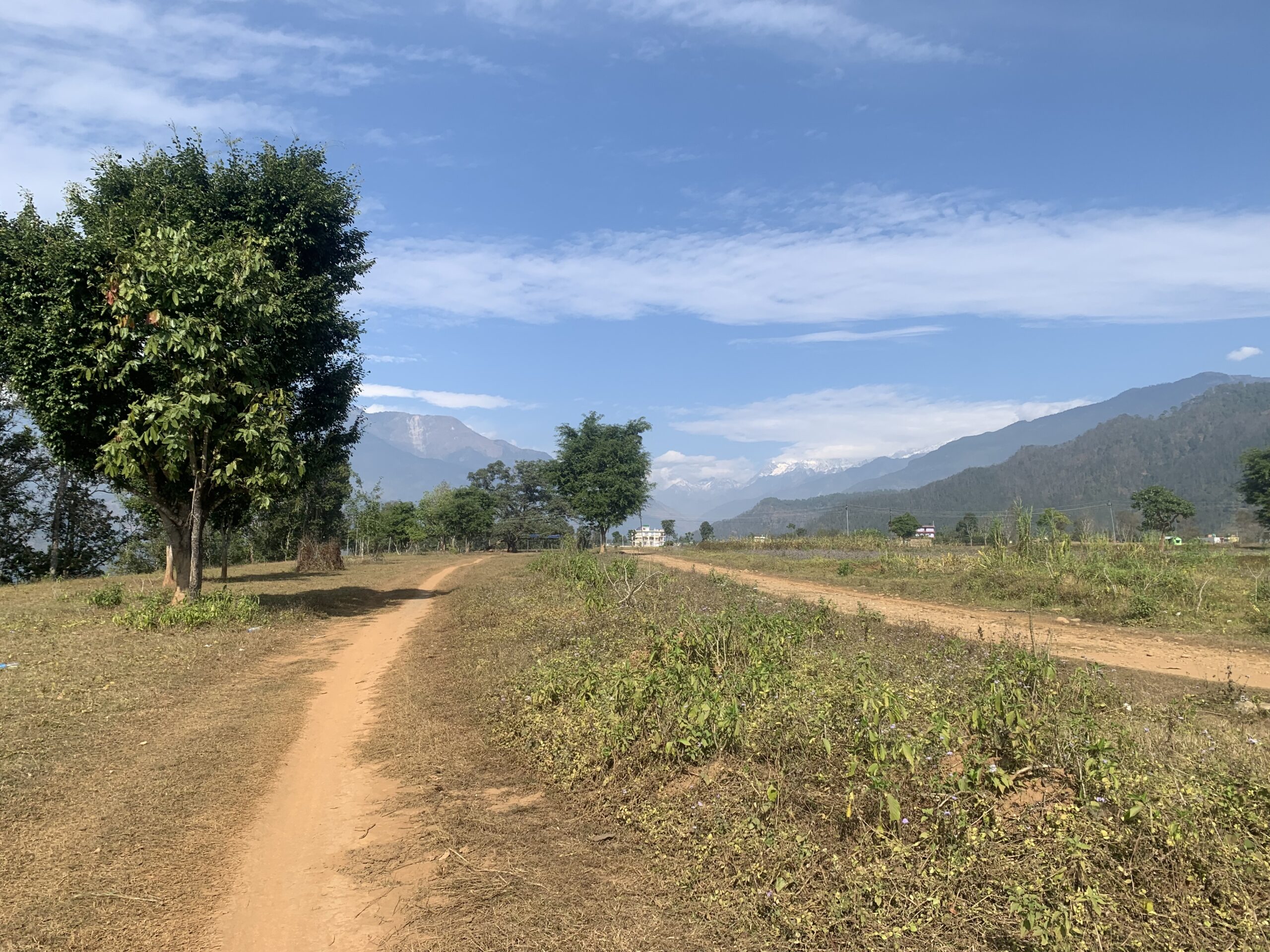
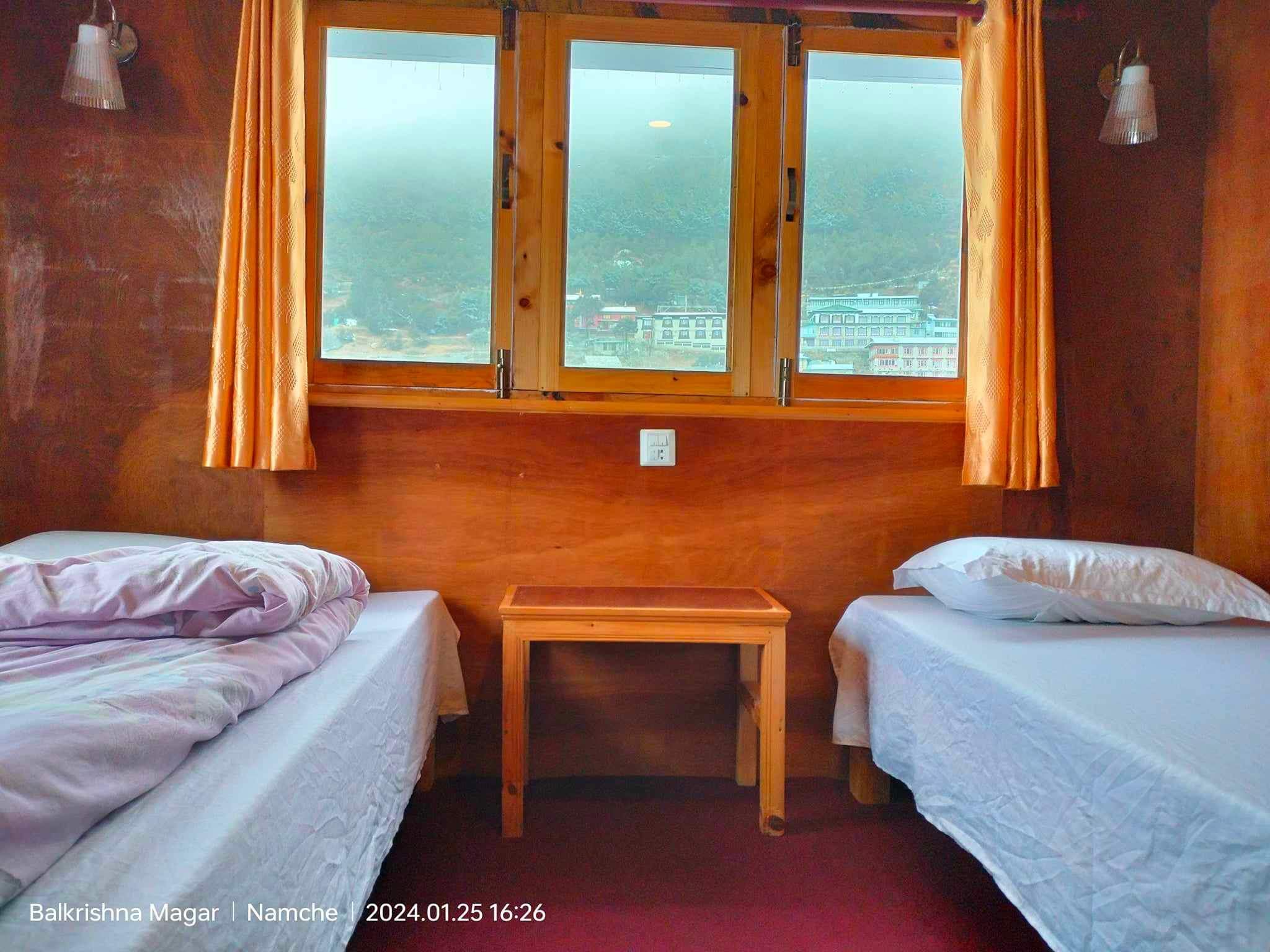
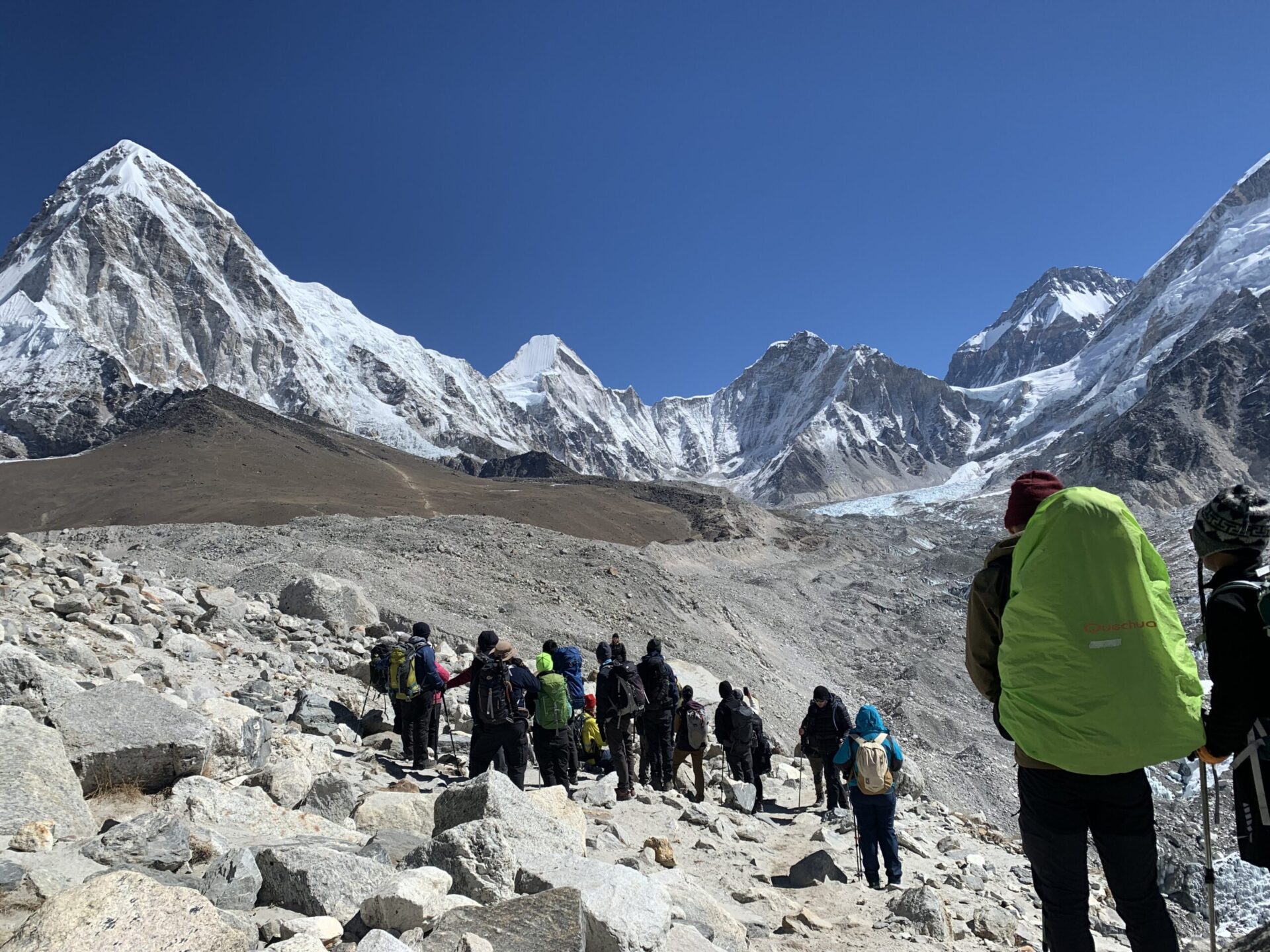
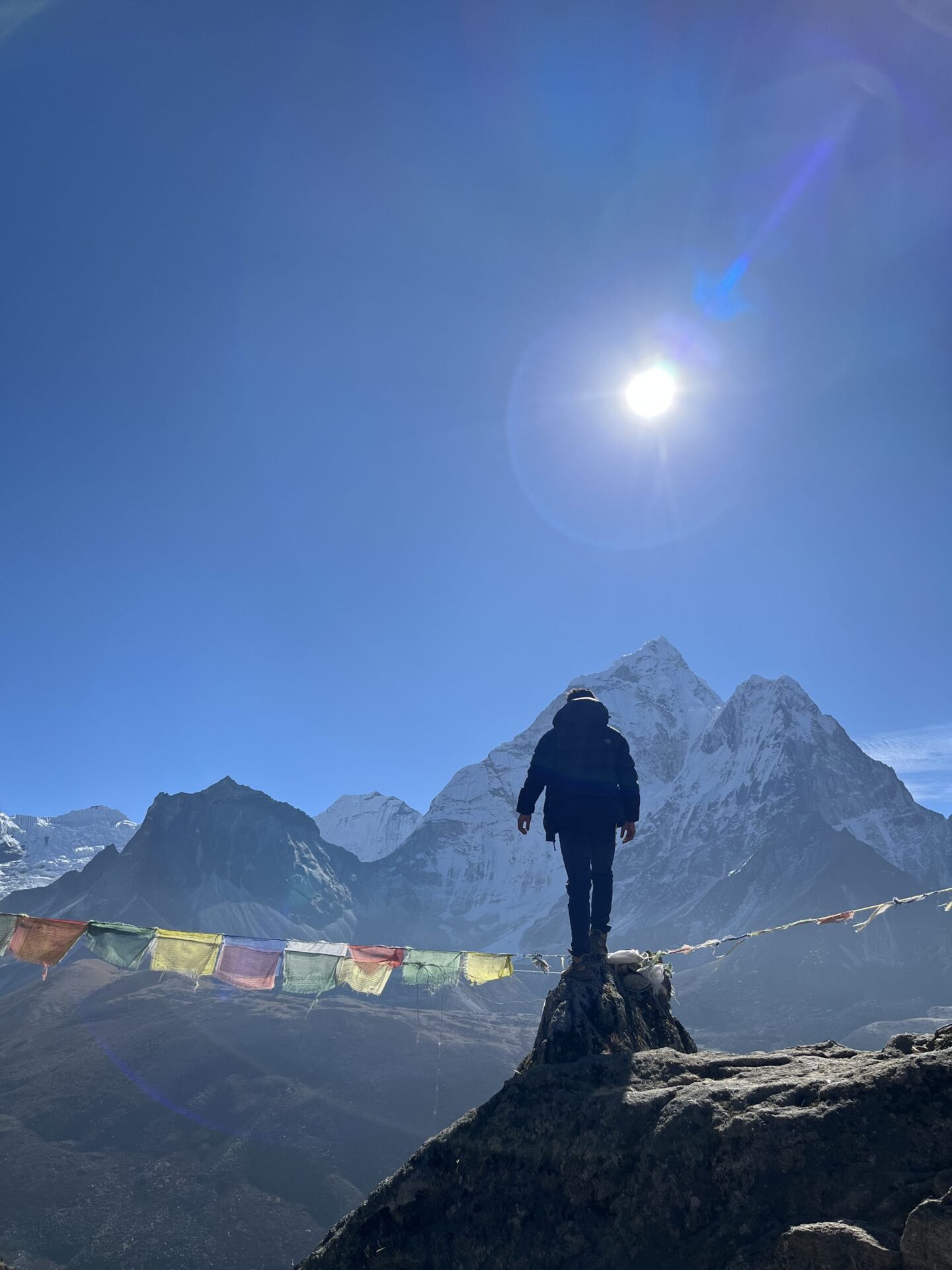
Wellness and Hiking Retreat in Kathmandu offers the perfect short escape to refresh your body, mind, and soul. This one-day, 24-hour program combines yoga, Ayurveda, meditation, and mindful hiking to help you recharge your energy, reset your lifestyle, and return home feeling lighter, calmer, and inspired.
What’s Included in the One-Day Wellness & Hiking Retreat in Kathmandu
This retreat offers a holistic mix of practices that balance movement, stillness, and healing. Participants will experience:
Morning Yoga & Pranayama for strength and flexibility
Meditation & Sound Healing to calm the mind
Yogic Cleansing Practices (Jala Neti, Dhauti, Sankhaprakshalana) for detoxification
Ayurveda Therapies: Shirodhara, Kerala full-body massage, steam & potali
Mindful Hiking in the serene natural beauty around Kathmandu
Best Day Hikes for Your Wellness & Hiking Retreat in Kathmandu
To enrich your retreat experience, we include short guided hikes in the peaceful hills and forests surrounding the valley. These trails combine natural beauty, cultural heritage, and spiritual energy, which makes them ideal for wellness activities.
Shivapuri National Park – Nature & Meditation Trails
Located north of Kathmandu, Shivapuri offers fresh air, flowing streams, and stunning Himalayan views. Along the trail, you’ll encounter monasteries, meditation caves, and sacred water springs. Because of its natural and spiritual harmony, it’s perfect for yoga practice, meditation, and cleansing rituals.
Jamacho Monastery Hike – Mindfulness & Spiritual Energy
Set inside Nagarjun Forest, just 7 km from the city, this moderate trail leads to the hilltop Jamacho Monastery (2,100 m). From the summit, enjoy panoramic valley views while being surrounded by prayer flags and pine forests. The spiritual atmosphere makes it especially suitable for sound healing and mindfulness practices.
Champadevi Hill – Yoga & Scenic Exploration
Situated on the southern rim of the valley, Champadevi is known for its sweeping Himalayan vistas and sacred shrines. The trail passes through lush forests before reaching a hilltop temple. This hike offers a mix of cultural richness and natural beauty, making it an excellent spot for yoga, meditation, and spiritual reflection.
Why These Kathmandu Trails Are Perfect for Yoga, Ayurveda & Wellness
Each destination brings its own unique atmosphere.
Shivapuri provides deep tranquility with its forest energy, flowing streams, and monasteries that invite quiet reflection.
Champadevi blends breathtaking Himalayan views with sacred heritage, creating a setting that naturally encourages inner renewal.
Together, these trails balance nature, peace, and spiritual connection, which enhances the transformative impact of yoga, Ayurveda, and meditation.
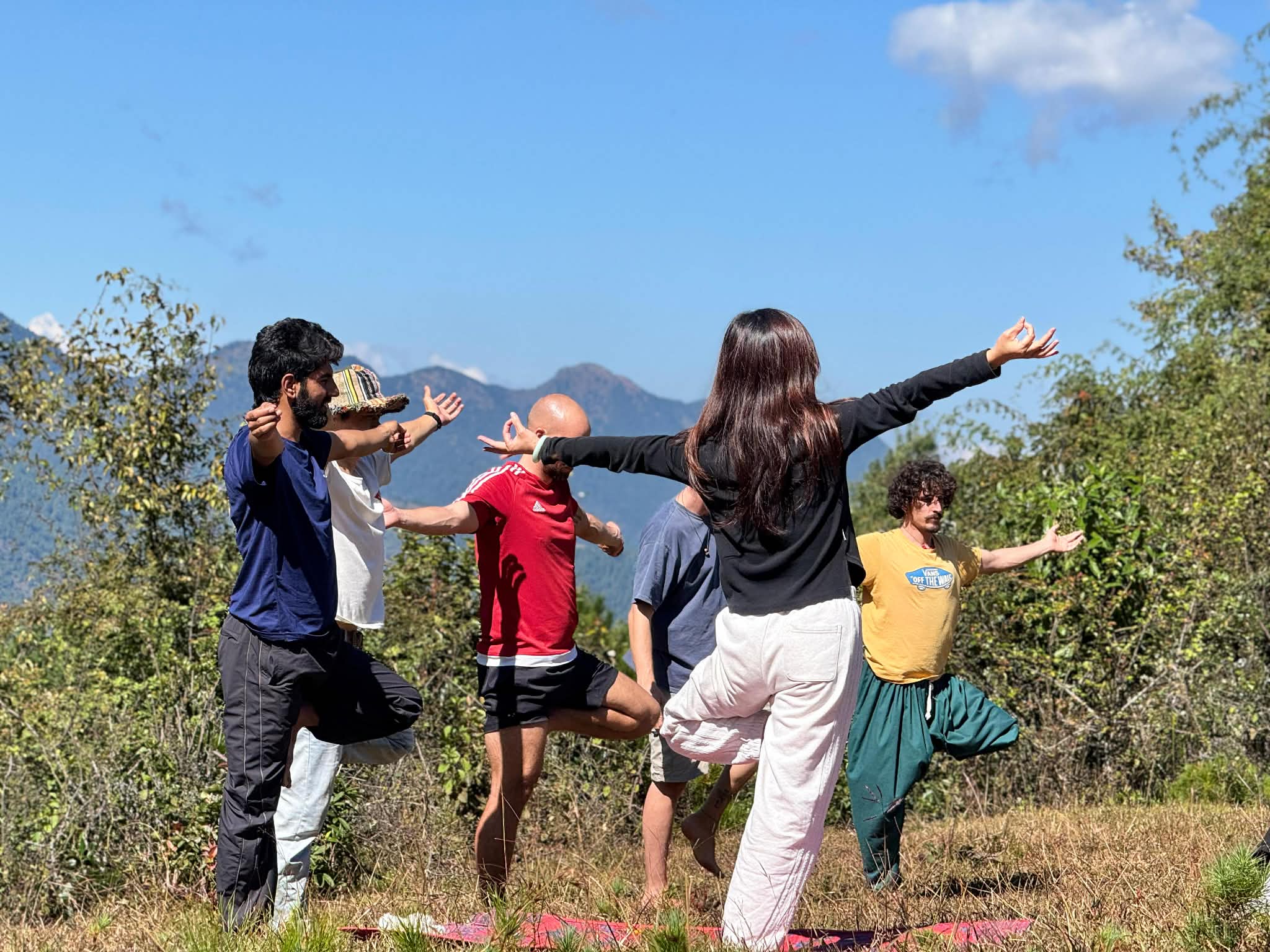
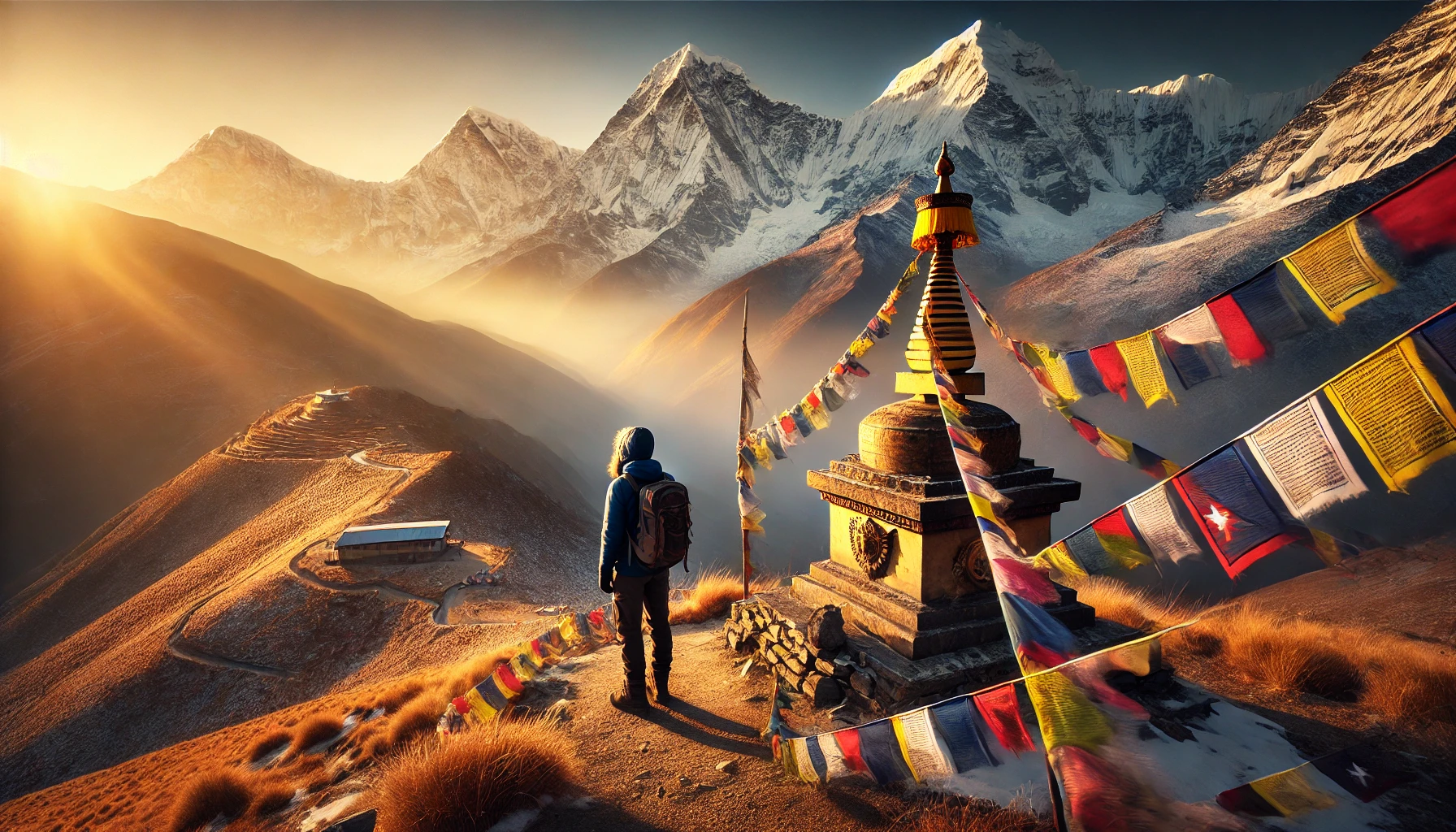
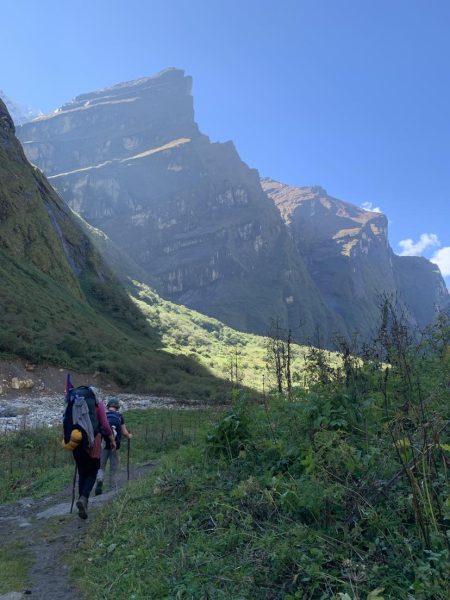
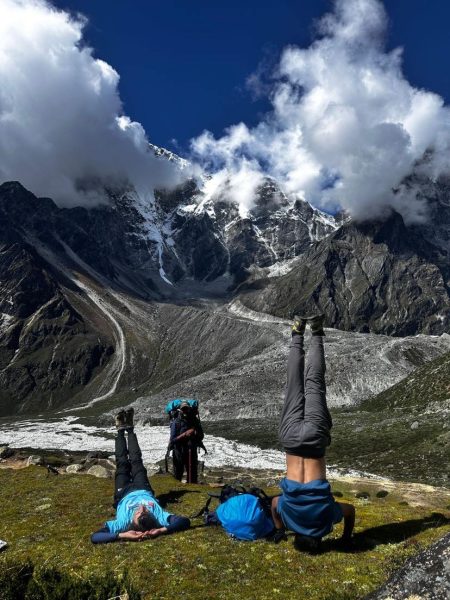
A peaceful morning yoga and hike session in the Himalayas, helping the body and mind feel calm and refreshed.
Why This Retreat Matters
1. Instant Reset for Body and Mind A full day of mindful movement, deep breathing, and Ayurvedic cleansing clears stress, fatigue, and mental fog—helping you feel light, calm, and re-energized.
2. Boosts Immunity and Natural Healing Ayurveda therapies like Shirodhara and Kerala massage improve circulation, detoxify the body, and balance your doshas. Even one session can help restore vitality and reduce tension.
3. Reconnection with Nature Walking through sacred forests and breathing Himalayan air rejuvenates your nervous system. Studies show nature hikes reduce anxiety, lower blood pressure, and boost overall happiness.
4. Mindfulness in Motion Yoga and hiking together turn movement into meditation. You learn to walk, breathe, and live consciously—carrying mindfulness into your everyday routine.
5. Holistic Transformation in a Short Time In just 24 hours, you’ll experience what usually takes days—a complete mind-body-soul recharge. It’s a time-friendly way to maintain wellness amid modern life’s rush.
Sample 24-Hour Wellness & Hiking Retreat Schedule
Friday Evening (Arrival)
4:30 – 5:30 pm: Welcome & health checkup (Arogya Parikshana)
For those who wish to add adventure, a one-night camping option is available near Shivapuri, Jamacho, or Champadevi. In the early evening, participants set up camp in the forest or hillside. As night falls, enjoy a campfire-style dinner, herbal tea, and meditation under the stars. The following morning, the retreat program continues with yoga, cleansing practices, and Ayurveda therapies.
This add-on deepens your connection to nature, offering a perfect blend of wellness, exploration, and wilderness experience.
Why Join This One-Day Kathmandu Wellness Retreat?
In just one day, you will: ✔️ Detox body & mind with yoga + cleansing ✔️ Recharge your energy through Ayurveda therapies ✔️ Find peace in mindful hiking through sacred forests ✔️ Return home lighter, calmer, and inspired
👉 Whether you’re a traveler or a local, this wellness and hiking retreat in Kathmandu offers the perfect combination of wellness, adventure, and nature—all within a day’s journey from the city.
Gosainkunda Trek: A Spiritual Journey to Nepal’s Sacred Lake in Langtang Region
The Gosainkunda Trek in Nepal is a sacred journey to a high-altitude lake believed to cleanse lifetimes of sins.
Have you ever stood beside a lake so sacred that its waters are believed to cleanse lifetimes of sins?
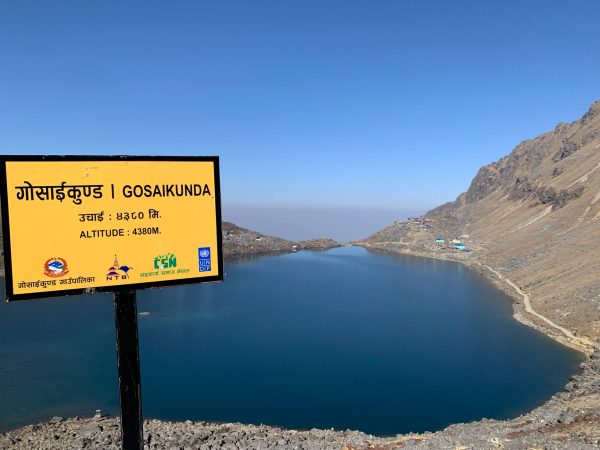
The Gosainkunda Trek in Nepal’s Langtang region, at an altitude of 4,380 meters, is more than just a trekker’s paradise — it’s a spiritual journey that connects nature, faith, and adventure in the most profound way. Surrounded by rugged Himalayan peaks and deep silence, the lake holds powerful significance for both Hindu and Buddhist pilgrims.
As you climb higher, the cold mountain air bites your cheeks. Prayer flags flutter in the wind, carrying whispered mantras across the valley. You pass quiet forests, stone stupas, and timeless mountain trails. And then—there it is: the shimmering blue of Gosainkunda Lake, still and sacred, mirroring snow-covered peaks like a celestial mirror.
“Some journeys don’t just take you to new places — they bring you back to yourself.”
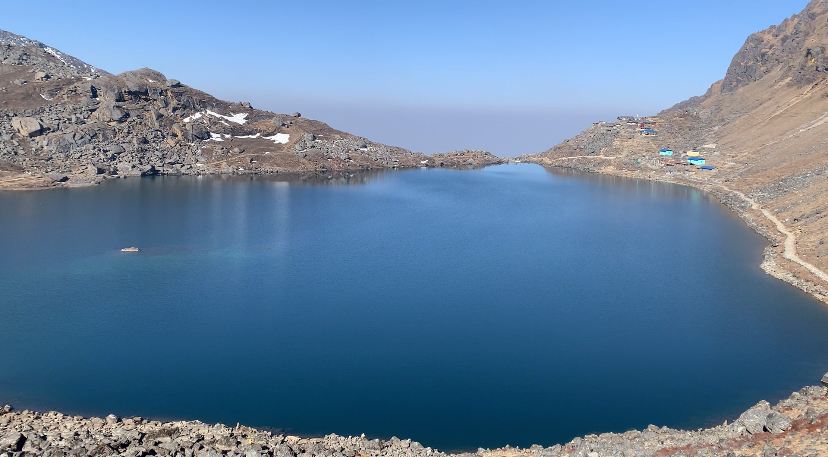
The tranquil Gosainkunda Lake nestled in the Himalayas.
Whether you arrive in the warmth of spring, when rhododendrons bloom, or during Janai Purnima, when pilgrims chant under misty monsoon skies, the lake welcomes you just the same — with silence, power, and peace.
If you’re looking for a high-altitude spiritual trek in Nepal that blends scenic beauty with cultural depth, the Gosainkunda Trek is one of the most unforgettable experiences you can have in the Himalayas.
Why Gosainkunda is Sacred: A Pilgrimage Trek in Nepal’s Langtang Region
Gosainkunda is a very special and holy lake that both Hindus and Buddhists respect. It is high up in the mountains of Nepal, at about 4,380 meters above sea level, surrounded by beautiful snow-covered peaks.
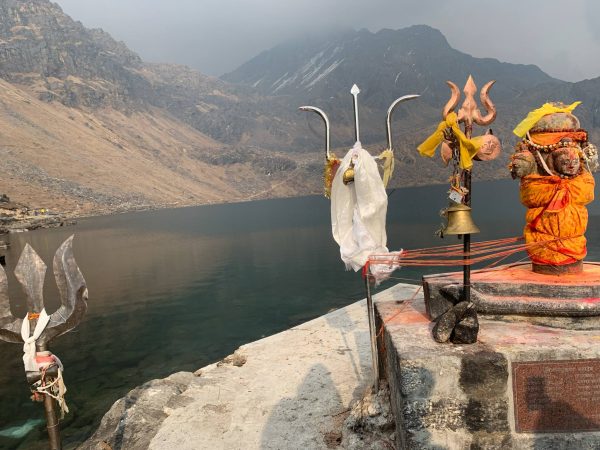
According to an old story, Lord Shiva created this lake. After drinking poison to save the world, his throat became very hot and painful. To cool down, he hit the ground with his trident (called a trishul), and the lake appeared.
Lord Shiva statue beside Gosainkunda Lake, a sacred Himalayan site.
Many people believe that the lake’s water is very powerful and holy. On a special day called Janai Purnima, which usually happens in August, thousands of pilgrims walk all the way to Gosainkunda. Many walk barefoot, sing prayers, and bring flowers and other offerings.
On this day, people bathe in the cold lake water because they believe it cleanses their sins and brings them blessings. Around the lake, you will see small lamps burning, prayer flags flying in the wind, and people quietly praying.
The trek to the lake can be hard because of the high altitude and cold weather, but many say the spiritual feeling they get is worth the effort. The peaceful and beautiful surroundings make the lake feel very special, like a place where the earth meets the sky.
Whether you come as a pilgrim or a traveler, visiting Gosainkunda is a chance to feel calm, connected, and inspired by nature and faith.
How to Reach Gosainkunda: Start Your Gosainkunda Trek from Kathmandu
To start the Gosainkunda trek, you first need to travel from Kathmandu, the capital city of Nepal, to the trekking starting point. Most trekkers go to either Dhunche or Syabrubesi, two small towns near the Langtang region.
Getting to Dhunche or Syabrubesi
By Jeep or Bus: The most common way is by jeep or local bus, which takes about 6 to 8 hours depending on the road and traffic. The roads are often rough and bumpy, especially during the rainy season, but the views make the trip worthwhile. You will drive through winding mountain roads, passing green hills, rivers, and traditional villages.
Private Vehicle: If you want a more comfortable and quicker option, you can hire a private jeep or car from Kathmandu. This way, you can stop whenever you want to enjoy the scenery or take photos.
Important Tips:
The road to Dhunche is paved but can be narrow and steep in some sections. Be prepared for a slow ride.
Syabrubesi is closer to the Langtang Valley trek and is a good choice if you plan to combine treks.
It’s best to start early in the morning from Kathmandu to avoid traffic and reach your destination before dark.
If you prefer, your trekking agency can arrange your transport, making the journey hassle-free.
What to Expect on the Way
Along the way, you’ll see beautiful forests, terraced fields, small villages, and sometimes local markets where you can stop for snacks or drinks. The fresh mountain air and changing landscapes will get you excited for the trek ahead.
Once you arrive in Dhunche or Syabrubesi, you can rest for the night and prepare for the trek starting the next day.
Gosainkunda Trek Itinerary (5–7 Days)
Day 1: Dhunche to Chandanbari (Sing Gompa) Day 2: Chandanbari to Laurebina Day 3: Laurebina to Gosainkunda Lake Day 4: Return the same way or cross Laurebina Pass (4,610m) Optional Day 5–6: Continue to Ghopte and down toward Helambu or Sundarijal
Each day you’ll walk 5–7 hours through forests, ridgelines, and alpine landscapes, often meeting friendly locals from Tamang and Sherpa communities.
Want a Longer Trek? Combine with Langtang Valley (10–14 Days)
If you’d like to extend your trek and explore the Langtang Valley, you can start from Syabrubesi instead of Dhunche. This route allows you to trek to Kyanjin Gompa, enjoy glacier views, and then return to join the Gosainkunda route.
🗓️ Sample Combined Itinerary: Langtang Valley + Gosainkunda
Day 1: Drive from Kathmandu to Syabrubesi Day 2: Trek to Lama Hotel Day 3: Trek to Langtang Village Day 4: Trek to Kyanjin Gompa Day 5: Acclimatization and optional hike to Kyanjin Ri or Tserko Ri Day 6: Trek back to Lama Hotel Day 7: Trek to Pairo / Bamboo and then up to Thulo Syabru Day 8: Thulo Syabru to Chandanbari (Sing Gompa) Day 9: Chandanbari to Laurebina Day 10: Laurebina to Gosainkunda Lake Day 11–12: Return via Laurebina Pass or descend to Ghopte and continue to Helambu or Sundarijal
This extended version takes about 10 to 14 days, depending on your pace and acclimatization needs. It’s a perfect option for trekkers looking to combine natural beauty with spiritual highlights in one unforgettable journey.
How Difficult is the Gosainkunda Trek? Tips for Langtang Trekking
This is a moderate trek, suitable for beginners with good fitness. The biggest challenge is the high altitude — symptoms like headache or dizziness may occur above 3,000m.
💡 Tips for managing altitude:
Walk slowly and take breaks
Drink plenty of water
Add 1–2 days for acclimatization if possible
Avoid alcohol and sleep well
My Personal Experience at the Lake
When I first reached Gosainkunda, the silence around the lake was striking. The icy-blue water shimmered under the sunlight like a sacred mirror. A fellow pilgrim offered me hot tea and shared his story — he walks here barefoot every year in honor of Lord Shiva.
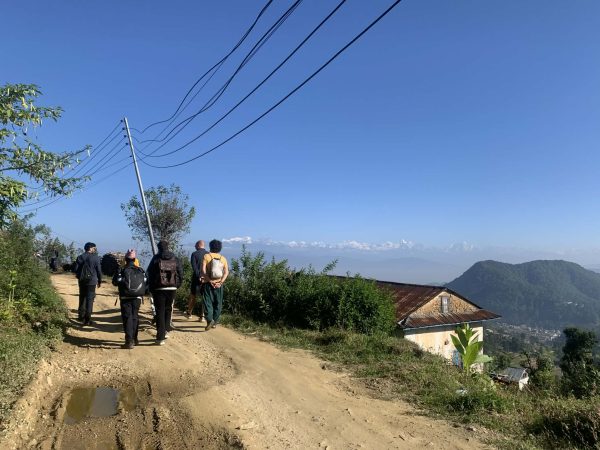
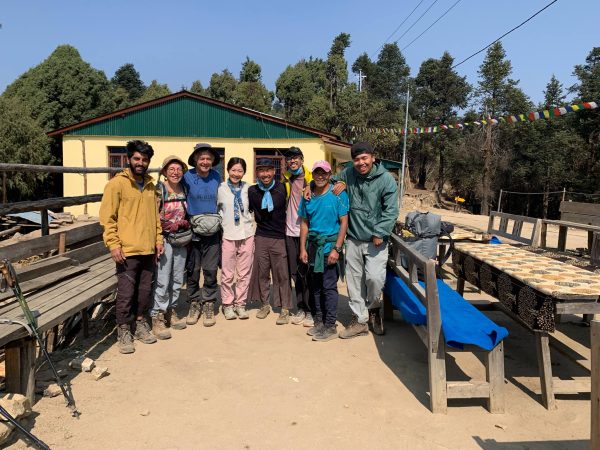
Trekkers capturing memories together on the scenic trail to Gosainkunda
That moment, surrounded by snow and devotion, reminded me that the Himalayas are not just mountains — they are teachers.
Challenges to Expect
“Altitude sickness is a common challenge for many trekkers on the Gosainkunda Trek, part of the high-altitude Langtang trekking routes in Nepal.”
🌧️ Unpredictable Weather: Clear mornings can turn into rainy or snowy afternoons. Always carry a rain jacket and warm layers.
🏠 Basic Facilities: Tea houses offer simple food (dal bhat, noodles) and basic rooms with shared bathrooms. Power cuts and cold nights are common.
📶 Limited Mobile Network: Signal is unreliable above Chandanbari. Inform loved ones beforehand and download offline maps.
Packing Essentials for Gosainkunda Trek
🎒 Must-Have Gear:
Thermal wear and warm jacket
Rain gear (poncho or raincoat)
Woolen hat, gloves, scarf
Trekking shoes and extra socks
Headlamp or flashlight
Water purification tablets or filter
Snacks (energy bars, nuts, chocolate)
Basic first aid kit (with altitude meds)
Cash (no ATMs along the route)
Best Time to Do the Gosainkunda Trek
Spring (March–May): Clear skies, blooming rhododendrons Autumn (Sept–Nov): Excellent mountain views, mild temperatures Janai Purnima Festival (August): Spiritually rich, but crowded and colder
Permits You’ll Need
Mandatory Trekking Permits:
TIMS Card (Trekkers’ Information Management System)
Langtang National Park Entry Permit
These can be arranged through a local trekking agency or purchased in Kathmandu.
Meeting Local People & Culture
During your Gosainkunda trek, you will meet the warm and friendly people of the Tamang and Sherpa communities who live in the mountain villages along the way. These communities have lived in the Himalayas for many generations, and their rich culture and traditions add a special charm to the trek.
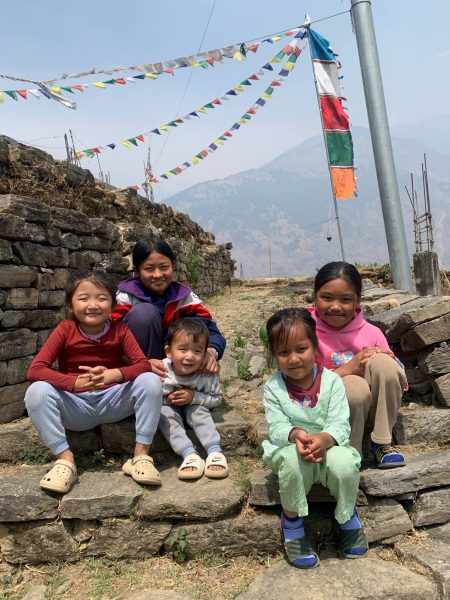
Smiling Tamang children along the Gosainkunda trail
Many local families run small tea houses and lodges where you can rest, enjoy home-cooked meals, and experience genuine Nepalese hospitality. They welcome trekkers with warm smiles and often share stories about their life in the mountains. Staying in these tea houses gives you a chance to connect with the local way of life.
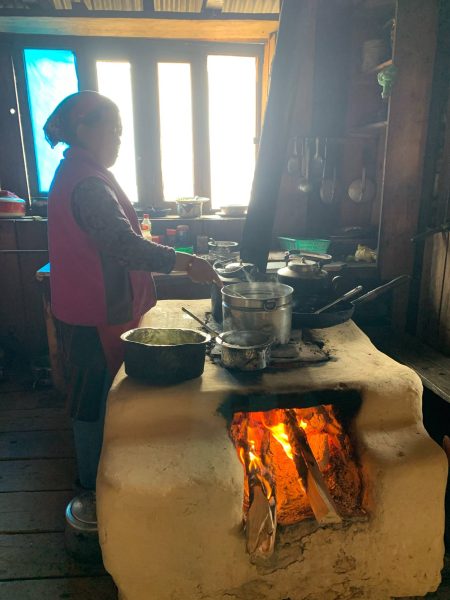
A local woman prepares a meal in her mountain kitchen
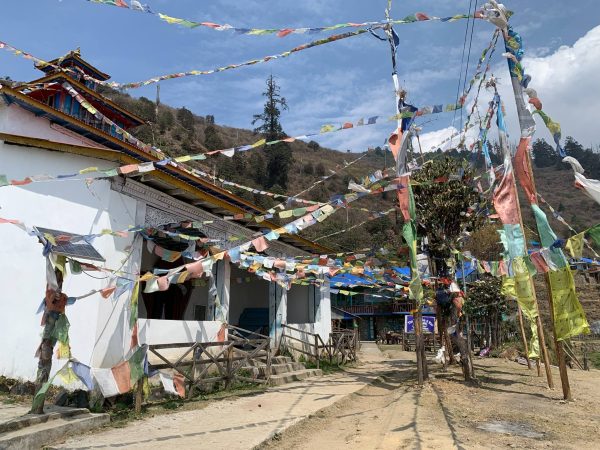
As you walk, you’ll see many Buddhist stupas (small shrines), ancient monasteries, and colorful prayer flags fluttering in the wind. These prayer flags carry prayers and good wishes, spreading peace and blessings across the valleys.
Don’t miss the chance to try some local food! One special treat is fresh yak cheese, often made by families in villages like Chandanbari. It’s rich, creamy, and a perfect snack to enjoy after a long day of trekking.
Peaceful monastery in Chandanbari surrounded by prayer flags
You might also hear traditional Tamang songs or see villagers celebrating local festivals if you time your trek right. This close encounter with mountain culture makes your journey even more memorable and meaningful.
Highlights of the Gosainkunda Trek
✔️ Standing at Gosainkunda Lake, surrounded by snowy peaks ✔️ Participating in spiritual rituals during Janai Purnima ✔️ Watching sunrise from Laurebina with panoramic Himalayan views ✔️ Enjoying local hospitality and warm tea in mountain tea houses ✔️ Trekking through rhododendron forests and peaceful ridges
Quick Facts
Feature
Details
Max Altitude
4,380 meters
Trek Duration
5–7 Days
Trek Difficulty
Moderate
Best Time to Visit
March–May & September–November
Main Festival
Janai Purnima (Full Moon in August)
Starting Point
Dhunche or Syabrubesi
Accommodations
Tea houses with basic facilities
Beyond the Trail: A Journey of Heart, Soul, and Discovery
The Gosainkunda Trek is much more than just walking through the mountains. It is a journey into yourself — a chance to find inner peace, reflect on life, and discover new meanings along the way. The crisp mountain air, the quiet beauty of the sacred lake, and the kindness of the local people all come together to create a deep and lasting experience.
Whether you come as a trekker seeking adventure, a pilgrim searching for spiritual healing, or simply a curious traveler wanting to connect with nature and culture, this trek will change you. You might find strength you didn’t know you had, feel a calm you didn’t expect, or see the world from a fresh new perspective.
The memories, the lessons, and the quiet moments by the shimmering waters of Gosainkunda will stay with you long after you leave. It’s a journey that touches your heart and soul — reminding you that sometimes, the most meaningful travels are the ones that change us from within.
💬 Have You Been to Gosainkunda?
Drop a comment below to share your story or ask questions if you’re planning your first journey. We’re happy to help you prepare for an unforgettable adventure in the heart of Nepal.
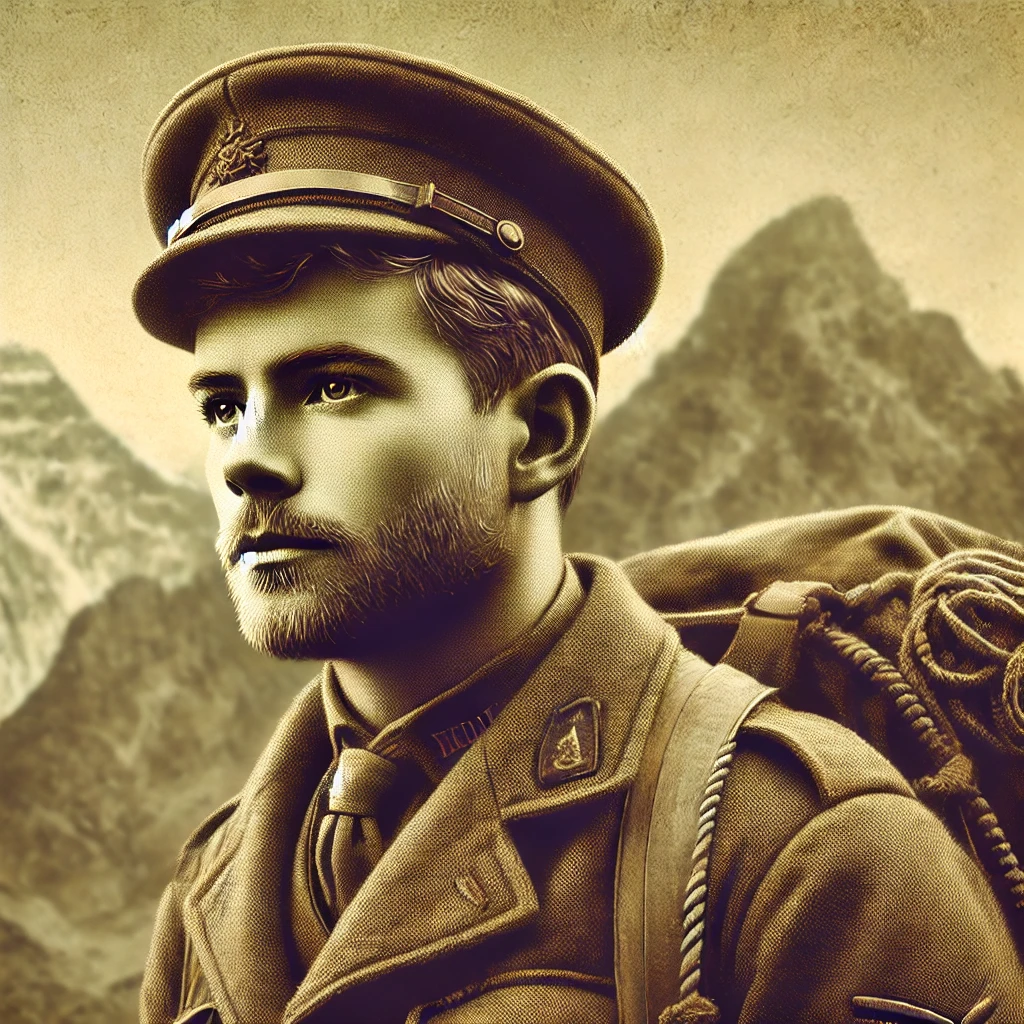
Maurice Wilson’s story is one of adventure, determination, and tragedy. A British war veteran with no mountaineering experience, he believed sheer willpower and faith could take him to the top of Mount Everest. Nevertheless, his plan was audacious—he intended to crash-land a small plane near the mountain and climb it alone. Maurice Wilson is often remembered as the Man who tried to climb Everest alone. Unfortunately, fate had other plans.
A Soldier Turned Adventurer
Born in England in 1898, Maurice Wilson served as a soldier during World War I. He suffered severe injuries in battle, yet his bravery earned him the Military Cross. However, the war left deep emotional scars, and he struggled to find purpose in life after returning home.
Seeking meaning beyond his military past, Wilson embarked on a spiritual journey. He explored fasting, meditation, and faith as a way to heal himself, believing that sheer willpower and divine guidance could help him overcome any obstacle.
During the early 1930s, Wilson became obsessed with Everest. He developed an unusual belief: faith, fasting, and determination could overcome any physical challenge. As a result, he became convinced that he was destined to reach the summit. Despite his enthusiasm, he prepared for his journey without any mountaineering experience or technical training.
A Risky Flight to Everest
Wilson purchased a de Havilland Gipsy Moth biplane, naming it Ever Wrest—a symbolic nod to his battle against the mountain. His plan was wildly ambitious: fly from England to Tibet, crash-land near Everest, and begin his solo ascent. However, the British government saw his mission as reckless and tried to stop him.
Despite multiple setbacks, Wilson managed to fly as far as India, where authorities grounded his plane. Undeterred, he decided to continue his journey on foot. Disguising himself as a Buddhist monk, he made his way toward Everest, determined to fulfill his dream at any cost.
The Journey with the Sherpas
Arriving in Darjeeling, India, Wilson enlisted three experienced Sherpas to assist him. The group trekked into Tibet and reached Everest Base Camp in 1934. However, upon assessing the brutal conditions, the Sherpas refused to climb any higher. They knew Wilson lacked the necessary experience and equipment to survive the ascent.
Ignoring their warnings, Wilson pressed on alone. Before departing, he told the Sherpas, “If I don’t return in two weeks, assume I am dead.”
A Lonely and Desperate Climb
Wilson documented his struggle in a diary, capturing his unwavering determination as well as his increasing weakness. With no climbing gear, minimal food, and no understanding of high-altitude survival, he faced insurmountable odds. The relentless cold, treacherous terrain, and lack of oxygen made every step an ordeal.
Weeks passed, and the Sherpas, waiting at Base Camp, began to lose hope. Wilson never returned.
The Discovery of His Body
In 1935, a British expedition led by Eric Shipton stumbled upon Wilson’s remains. He was found inside his tent, wrapped in his sleeping bag. His diary lay nearby, detailing his final days of struggle. The cause of death was likely a combination of exhaustion, starvation, and exposure to the unforgiving Himalayan cold.
A Dream That Ended in Tragedy
Maurice Wilson’s attempt to conquer Everest was both inspiring and reckless. He had the heart of an adventurer but lacked the skills and preparation required to survive. His story remains one of the most unusual in mountaineering history—a testament to human ambition, the power of belief, and the steep price of chasing an impossible dream.
Why Maurice Wilson’s Story Still Fascinates the World
Despite his failure, Wilson’s tale continues to captivate adventurers and historians alike. His boldness, defiance of authority, and sheer willpower embody the spirit of those who dare to dream beyond their limits. In a world where modern climbers rely on advanced gear and guided expeditions, Wilson’s lone, ill-equipped journey stands as a stark reminder of the mountain’s unforgiving nature.
Would you have joined Wilson on his daring quest? Share your thoughts in the comments below! If Everest is calling you, let us help you plan a safe and unforgettable trekking adventure. Contact us today to make your dream trek a reality!
Trekking in Nepal is not just about reaching high altitudes; rather, it’s a journey that transforms your mind, body, and spirit. Imagine walking through ancient trails where monks have meditated for centuries, feeling the crisp mountain air, and immersing yourself in the stillness of nature.
Mindful trekking, therefore, is about more than just adventure; it’s a path to self-discovery. As you walk through the Himalayas can help you connect with nature, explore ancient cultures, and ultimately find inner peace. Moreover, if you add yoga or meditation to your trek, it can become a truly life-changing experience.
Learning from Nature: The Essence of Mindful Trekking in Nepal
Nepal’s landscapes are not only beautiful; indeed, they possess a special energy. For instance, as you walk through green forests, cross rivers, and stand in the shadow of towering mountains, you may feel small—but in a good way. Eventually, you come to realize how vast and interconnected the world truly is.
“Trekking in Nepal offers more than just adventure—it’s an immersive experience that connects you to the beauty and serenity of nature.”
The sound of the wind, the rustling of leaves, and the silence of high-altitude deserts create a peaceful environment. As a result, many trekkers say the mountains teach them to let go of stress and focus on what really matters. This is the essence of mindful trekking in Nepal—finding peace and clarity along the journey.
Experiencing Culture Along the Trails
Nepal is not just about mountains; it is also home to rich traditions. While you trek, you will pass through villages where life has remained unchanged for centuries. You’ll see colorful prayer flags, Buddhist stupas, and locals spinning prayer wheels.
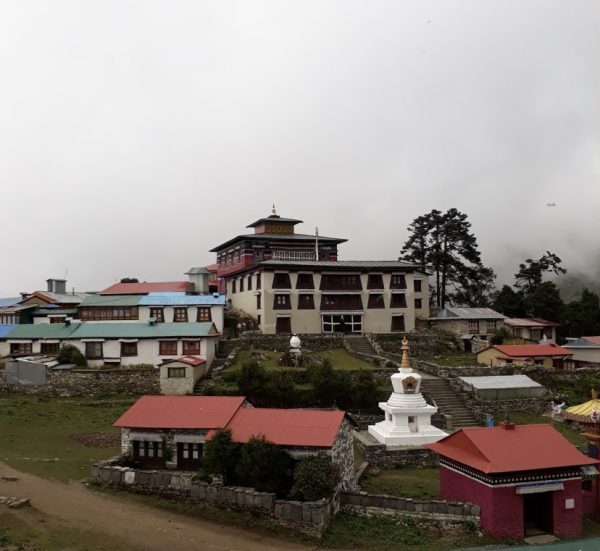
“Along the trek, you will encounter spiritual sites like Tengboche Monastery, a perfect blend of culture, religion, and nature.”
Staying in small teahouses with local families is one of the most magical parts of the journey. In addition, sharing meals, listening to stories, and learning about their traditions will make you appreciate life in a completely new way. In fact, many trekkers leave with a new sense of gratitude and a deeper understanding of community.
However, for some, mindful trekking in Nepal is more than just an experience—it’s a spiritual journey.
Trekking as a Pilgrimage
Beyond physical adventure, mindful trekking in Nepal has long been a path for seekers searching for deeper meaning. For example, many trails, such as Everest Base Camp and Muktinath, hold ancient spiritual significance. Walking these paths feels like stepping into history, where every prayer flag and monastery tells a story of devotion and wisdom.
Along the way, you’ll encounter ancient monasteries, prayer walls, and sacred shrines. Whether you are religious or not, these places carry a peaceful energy that invites you to pause, reflect, and be present in the moment.
Adding yoga and meditation to your trek enhances mindfulness, helping you connect with yourself and the Himalayas on a deeper level. Even a few moments of stillness in nature can make a significant difference.
“Yoga and meditation in the Himalayas bring you closer to mindfulness, allowing you to connect with both the mountains and your inner self.”
If you want to make your trek even more meaningful, adding yoga and meditation can be the key. For instance, imagine starting your day with yoga as the sun rises over the Himalayas, or meditating by a quiet mountain lake at sunset.
The remote environment, free from distractions, makes it easier to focus on yourself. You don’t need to be an expert—just taking a few moments to breathe deeply and be present can make all the difference in how you feel during your journey.
Lessons from the Himalayas
Mindful trekking in Nepal teaches you patience, strength, and gratitude. For example, the physical challenges—steep climbs, altitude sickness, and changing weather—will push you beyond your limits. However, in these difficult moments, clarity and inner strength often emerge.
By the time you finish your trek, you won’t just have photos and memories; you will have a deeper connection with nature, a respect for different cultures, and a sense of peace that stays with you long after you leave the mountains.
Final Thoughts
Trekking in Nepal is more than an adventure—it’s a journey for the soul. In fact, it’s about slowing down, listening to nature, and opening your heart to the wisdom of the mountains and the people who live there.
Whether you are an experienced trekker or a first-time traveler, Nepal has a way of reminding you what truly matters in life. And if you combine trekking with yoga and meditation, your journey can become even more powerful.
So, lace up your boots, take a deep breath, and let the journey begin.
Soulful Steps: Trekking, Meditation, and the Spirit of Langtang
In November 2024, we set off on an exciting trek to Langtang with a Yala Peak climb. The journey began with a drive from Kathmandu to Syabrubesi, where we spent our first night. The next morning, full of energy, we began our trek to Lama Hotel. However, soon we realized a mistake—we hadn’t booked a room in advance! Lama Hotel, being a central stop for both ascending and descending trekkers, was fully packed. With no other option, we and a few other trekkers had to sleep in the dining hall. It wasn’t the best sleep, but it was a fun experience that reminded us of impermanence and the need to embrace each moment with gratitude.
As we continued our journey, we immersed ourselves in mindfulness. Every step became a meditation, every breath a prayer. The towering peaks, the sound of the river, and the whispering winds all felt like nature’s way of guiding us toward inner peace. Along the way, we visited Buddhist Gompas and monasteries, where we took moments of silence, letting the energy of these sacred spaces fill our hearts. The sight of prayer flags fluttering in the wind and the rhythmic chants of monks created a deep sense of serenity within us.
After passing Kyanjin, we headed toward Yala Peak Base Camp, where we set up our tents. That night was unforgettable—our tents were frozen, covered in layers of ice. Stepping outside felt like walking into a deep freezer! Yet, in that extreme cold, we found stillness.
“That night at Yala Peak Base Camp, our tents were frozen, wrapped in layers of ice. Stepping outside felt like stepping into a world untouched by time—silent, vast, and humbling. Despite the biting cold, we meditated under the stars, feeling a deep sense of connection to the universe. As we climbed to the summit, slow steps turned into a personal mantra—teaching us that patience, determination, and mindfulness could take us anywhere, both in trekking and in life. When we had to wake up at 2 AM for the summit push, no one wanted to leave their sleeping bags, but we reminded ourselves of the Sherpa wisdom: “Slow steps reach far.”
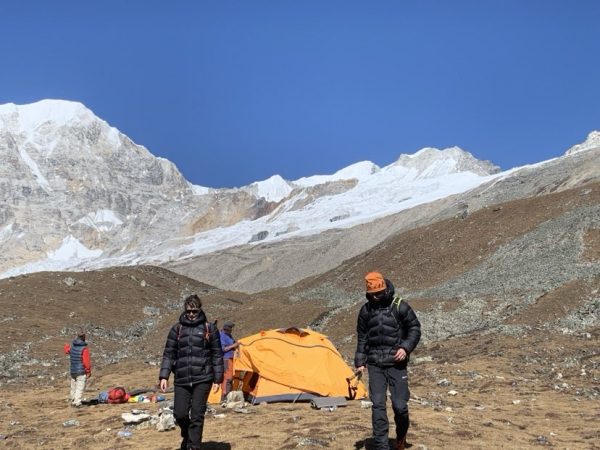
“Camping at Yala Peak Base Camp—where the silence of the mountains, crisp alpine air, and starlit nights make for an unforgettable trekking experience.”
Despite the cold, we pushed forward with determination. The climb was challenging, but each step upward felt like a step toward self-discovery. When we finally stood at the summit of Yala Peak, the breathtaking views felt like a divine blessing. The vastness of the Himalayas reminded us of the infinite possibilities in life and the beauty of perseverance. Filled with joy and accomplishment, we made our way back to base camp and eventually to Syabrubesi, bringing an end to this incredible adventure.
After descending back to Syabrubesi, we ended this incredible adventure, feeling a sense of peace. In fact, we realized that every path we walk holds the potential for transformation.
Why spiritual? To begin with, this trek takes you through Tengboche Monastery, the largest monastery in the Everest region. The sight of Mount Everest behind fluttering prayer flags makes it a truly spiritual experience. Additionally the monks chanting in the monastery add to the peaceful atmosphere. Best for: Spiritual seekers, experienced trekkers (due to high altitude and long trekking days).
Expect: Stunning views of Everest, visits to Sherpa villages, and meditation moments at sacred sites.
2. Annapurna Sanctuary Trek
Why spiritual? The trek leads to the heart of the Annapurna range, a place deeply revered by locals. The natural amphitheater of Annapurna Base Camp is often compared to a temple in itself, inspiring deep introspection. As a result, this trek is perfect for those looking for spiritual reflection. Best for: Beginners, nature lovers, and those seeking deep reflection in nature.
Expect: Breathtaking mountain views, peaceful sunrise meditations, and a sense of awe in nature’s presence.
3. Upper Mustang Trek
Why spiritual? Known as the “Last Forbidden Kingdom,” Upper Mustang preserves Tibetan Buddhist culture. The caves of Lo Manthang, ancient monasteries, and the spiritual energy of the region make it a perfect place for a meditative trek. Thus, it’s an excellent opportunity for spiritual seekers to connect deeply with the land. Best for: Cultural explorers, spiritual seekers, and experienced trekkers (due to its remoteness and dry terrain).
Expect: Remote, untouched landscapes, encounters with monks, and insights into Tibetan Buddhist traditions.
4. Gosaikunda Trek
Why spiritual? The high-altitude sacred lake of Gosaikunda is a Hindu pilgrimage site believed to be created by Lord Shiva. Trekkers often find a deep sense of peace and reflection in this isolated setting. Consequently, this trek provides both physical and spiritual rewards. Best for: Pilgrims, spiritual seekers, and moderate trekkers (some steep climbs but rewarding views).
Expect: Alpine lakes, high-altitude meditation spots, and a blend of Hindu and Buddhist spiritual influences.
5. Tsum Valley Trek
Why spiritual? Known as the “Hidden Valley of Happiness,” Tsum Valley is home to ancient Buddhist traditions, sacred caves, and meditation sites associated with the great saint Milarepa. As a result, it offers a perfect environment for deep spiritual growth. Best for: Spiritual seekers, meditation practitioners, and those looking for an off-the-beaten-path experience.
Expect: Peaceful villages, interactions with Buddhist monks, and visits to sacred caves for meditation.
6. Helambu Trek
Why spiritual? Helambu is known for its strong Buddhist influence, with several monasteries and meditation centers, making it a great short spiritual trek close to Kathmandu. Therefore, it’s ideal for those looking to incorporate mindfulness into a shorter journey. Best for: Beginners, spiritual travelers, and those with limited time.
Expect: Monastery visits, stunning Himalayan views, and quiet trails for mindful walking.
7. Rara Lake Trek
Why spiritual? Rara Lake, Nepal’s largest lake, is a pristine and isolated location. The silence and beauty of the lake make it a perfect destination for those seeking inner peace. As such, this trek is ideal for those looking to disconnect and find serenity. Best for:Nature lovers, solitude seekers, and those wanting a peaceful trek. Expect: A peaceful, remote journey, breathtaking lake views, and complete immersion in nature.
8. Pathibhara Trek
Why spiritual? Pathibhara Devi Temple is a revered Hindu pilgrimage site, believed to fulfill the wishes of those who pray with a pure heart. It’s a great spiritual trek for both devotees and seekers of solitude. Therefore, it combines devotion with the beauty of nature. Best for: Devotees, spiritual seekers, and those looking for a short but meaningful trek.
Expect: Sacred rituals, stunning sunrise views, and a mix of devotion and adventure.
9. Kanchanjunga Base Camp Trek
Why spiritual? The area is sacred to both Hindus and Buddhists, and its remoteness provides an ideal setting for self-discovery and reflection. This trek offers not just scenic beauty, but a chance for deep introspection as well. Best for: Experienced trekkers and those looking for solitude and self-discovery.
Expect: Majestic mountain landscapes, fewer crowds, and an opportunity for deep personal reflection.
10. Panch Pokhari Trek
Why spiritual? The five holy lakes of Panch Pokhari are a significant pilgrimage site for Hindus and offer an off-the-beaten-path experience in the Himalayas. Consequently, it provides an incredible opportunity for spiritual reflection in a quiet, remote setting. Best for: Pilgrims, spiritual travelers, and those wanting a quiet adventure.
Expect: Pristine lakes, quiet meditation spots, and a chance to disconnect from the modern world.
Trekking in Nepal is more than just a physical adventure—it’s a journey of self-discovery, connection, and transformation. The Himalayas offer not just breathtaking landscapes but also a chance to slow down, reflect, and find peace within. Whether you dream of meditating in the quiet valleys of Tsum, walking the sacred trails of Gosaikunda, or finding stillness at Everest’s doorstep, your journey begins with a single step.
Are you ready to take that step? Start planning your spiritual trek today! Drop a comment below and share your thoughts, experiences, or questions—we’d love to hear from you.
🔹 Have you already done a spiritual trek in Nepal? Share your experience and tips! 🔹 If you’re planning a trek, what excites you the most?
Let’s start a conversation in the comments! Your insights and stories can inspire others on their own mindful trekking journey.
Each of these treks offers more than just physical adventure—they provide an opportunity to connect with nature, reflect on life, and experience Nepal’s rich spiritual traditions.
How to Prepare for a Mindful Trek in Nepal
A mindful trek is more than just walking in the mountains. It’s about being present, connecting with nature, and finding inner peace. To make your journey comfortable and meaningful, here’s what you need to know.
1. Packing List for a Mindful Trek
Packing smart ensures you stay comfortable and fully present on your trek. Here’s what you’ll need:
Essential Gear
Backpack (30–50L) – Big enough for essentials but not too heavy Trekking boots – Comfortable and already worn-in to avoid blisters Layered clothing – Lightweight and breathable for different temperatures Sleeping bag – Warm enough for cold nights in the mountains Trekking poles – Help with balance and reduce strain on your knees
Mindfulness & Meditation Items
Journal – Write your thoughts and reflections along the way Prayer beads (Mala) – Useful for meditation or chanting Small prayer flag or religious item – If you follow a spiritual practice Music player (optional) – For guided meditation or peaceful sounds
Health & Safety Must-Haves
First-aid kit – Includes altitude sickness medicine, bandages, and pain relievers Water filter or purification tablets – Safe drinking water is important Sunscreen & lip balm – Protect your skin from strong mountain sun Snacks – High-energy foods like nuts, dried fruit, or protein bars
2. Best Time to Go for a Mindful Trek
Choosing the right season makes your trek more enjoyable.
Spring (March–May): Beautiful rhododendron forests and clear skies Autumn (September–November): Stable weather and stunning mountain views Winter (December–February): Peaceful and less crowded, but very cold at high altitudes Monsoon (June–August): Lush green landscapes, but trails can be muddy and slippery
3. Mind & Body Preparation: Getting Ready for the Trek
A mindful trek is more than just walking—it’s about being physically and mentally prepared for the journey ahead.
🔹 Mental Preparation
Practice daily meditation – Helps you stay calm and present during the trek Set an intention – Why are you trekking? For peace, clarity, or adventure? Learn about the route – Understand the spiritual significance of the places you’ll visit
🔹 Physical Training
Start hiking regularly – Walk with a backpack to get used to carrying weight Strength exercises – Squats and lunges help with uphill trekking Improve endurance – Jogging, cycling, or swimming will help build stamina
✔ Pro Tip:Start training at least 4–6 weeks before your trek to build strength and endurance gradually.
Spiritual Practices for the Journey
Your trek is not just about movement—it’s about awareness. Practicing these simple mindfulness techniques will help you feel more present with every step.
🔹 Meditation Techniques for Trekking
Walking Meditation – Focus on each step and your breath as you move Silent Trekking – Try walking in silence for a while to deepen mindfulness Gratitude Practice – Pause to appreciate the beauty of the mountains and the people you meet
🔹 Mindfulness Tips for the Trail
Be present – Listen to the wind, feel the earth under your feet, and embrace the moment Respect local culture – Greet people with a smile and a simple “Namaste” Leave no trace – Carry out all your trash and avoid plastic waste
✔ Pro Tip:Take moments to sit in stillness, breathe deeply, and simply observe your surroundings.
Are You Ready for a Mindful Trek?
Packed light but with all essentials Prepared physically with hikes and exercises Mentally ready with meditation and intention-setting Open to embracing the journey with mindfulness and gratitude
Are you ready to embark on your own mindful trekking journey? Whether you seek adventure, spiritual insight, or simply a break from daily life, Nepal’s trails are waiting for you. Pack your bags, open your heart, and let the mountains guide you to something greater.”
“Are you ready to experience the transformational power of trekking in Nepal? Let us handle all the logistics while you focus on the journey. Contact us today to plan your next adventure!”
Nestled in the heart of the Dolpa district lies a hidden gem of natural beauty and cultural significance – the Shey Phoksundo National Park. Covering an expansive 3,555 square kilometers, this pristine wilderness is Nepal’s largest trans-Himalayan sanctuary. Its unique landscape features lush juniper forests and rugged terrain, offering a pristine wilderness experience.
Divided into Upper and Lower Dolpo, the park spans across Dolpa and Mugu districts. Access to Upper Dolpo requires specific permits due to its remote and unexplored nature. Amidst the park’s rugged grandeur, visitors discover untouched beauty and serenity, making it an isolated paradise for nature enthusiasts and adventurers alike.
Discovering Shey Phoksundo National Park
Located at coordinates 29º10’24″N 82º56’12″E, Shey Phoksundo National Park is more than just a protected area; it’s a sanctuary teeming with life and wonder. Its traditional name, Yungdrung Lhatso, speaks to its deep-rooted spiritual importance, drawing pilgrims and trekkers alike to its sacred grounds.
A Natural Wonderland
Shey Phoksundo National Park boasts an unparalleled variety of flora and fauna, from elusive snow leopards and musk deer to vibrant endemic butterflies. The park is a testament to Nepal’s biodiversity, with birch, juniper, oak, and cedar forests painting the landscape in a kaleidoscope of colors. During the trek to Phoksundo Lake, you’ll traverse dense forests housing diverse tree species like oaks, pines, and firs. Along the route, you’ll encounter suspension bridges and traditional towns.
The Majesty of Phoksundo Lake
At the heart of the national park lies the jewel of the Dolpo region – Phoksundo Lake. This glacially dammed, oligotrophic lake mesmerizes visitors with its azure waters and tranquil surroundings. With a maximum depth of 145 meters and covering an area of 4.94 square kilometers, Phoksundo Lake is a sight to behold.
Cultural Riches
The cultural myth surrounding Phoksundo Lake adds another layer of intrigue to its allure. Legend has it that Guru Rinpoche, in pursuit of a demoness, unleashed the wrath of the lake upon deceitful villagers, submerging their homes in its cerulean depths. To the north lies Tshowa Monastery, while Ringmo Village lies to the south, known for its Bon-Po culture. Hikers can explore monasteries like Shey Gompa and Thasung Gompa during their mountain journey.
Phoksundo Lake, nestled in Nepal’s Dolpo region, is renowned for its sacredness and stunning blue-green hues. At an elevation of 3,640 meters, it attracts thousands of visitors yearly. It’s not only Nepal’s deepest lake but also one of its most pristine. Spanning 5.15 square kilometers with a maximum depth of 145 meters, it features over 20 stupas along its southern shore and holds deep cultural significance. Set against the majestic Kanjieowa mountains, its breathtaking turquoise waters make it one of the world’s most scenic destinations.
Tips for the Trek
For those embarking on the Shey Phoksundo Lake Trek, preparation is key. Light rain, scorching sun, and chilly breezes await, so pack accordingly. Snacks and amenities may be scarce along the trail, so it’s wise to carry provisions and first-aid supplies. Additionally, don’t forget a power bank for your gadgets, as electricity is a luxury in these remote lands.
Exploration Awaits
As you traverse the rugged terrain of Shey Phoksundo National Park, take time to immerse yourself in the local culture. Greet villagers with a warm “Namaste” or “Tashi Delek” and delve into the intricacies of their traditional lifestyle and handicrafts.
Phoksundo Lake Trek Itinerary
Embarking on the Phoksundo Lake Trek is a journey like no other. From the bustling streets of Kathmandu to the tranquil shores of Phoksundo Lake, each step unveils new wonders and experiences.
Day 1: Arrive in Kathmandu and prepare for your adventure.
Day 2: Fly to Nepalgunj and prepare for your flight to Juphal.
Day 3: Trek from Juphal to Dunai, immersing yourself in the natural beauty of the region.
Day 4: Continue your trek to Chhekpa, marveling at the stunning landscapes along the way.
Day 5: Journey to Jharana Hotel, where the sound of cascading waterfalls awaits.
Day 6: Trek to Phoksundo Lake and witness its ethereal beauty firsthand.
Day 7: Spend a day exploring Ringmo village and the surrounding monasteries.
Day 8: Begin your descent back to Chhepka, taking in the sights one last time.
Day 9: Return to Juphal and prepare for your journey back to Kathmandu.
Day 10: Departure day, bidding farewell to the wonders of Shey Phoksundo National Park.
In Conclusion
As your adventure in Shey Phoksundo National Park comes to a close, take a moment to reflect on the memories made and the beauty witnessed. From the depths of Phoksundo Lake to the towering peaks of the Himalayas, this journey is one you’ll cherish for a lifetime. So, until we meet again, may your travels be filled with wonder and discovery. Farewell, and may the spirit of Nepal guide your path.
Are you ready for an incredible adventure in the heart of the majestic Annapurna region? The Annapurna Base Camp trek is not just a journey of distance; it’s a magical exploration of natural wonders and cultural richness. In this blog, we’ll take you through the key details of the trek, focusing on the distances covered each day, the breathtaking landscapes, and the overall experience of this amazing trek.
The Magnificent Annapurna Region:
Nestled in the lap of the Annapurna Sanctuary, the Annapurna Base Camp (ABC) stands at an elevation of 4,130 meters above sea level. This trek is renowned for its captivating mountain views and the unique blend of natural and cultural beauty found throughout the region.
The Journey Begins in Pokhara:
The trek kicks off in the enchanting City of Lakes, Pokhara, offering a glimpse of the diverse landscapes and vibrant culture that lie ahead. From Pokhara, the trail weaves through picturesque bamboo forests and cascading waterfalls, setting the stage for the incredible adventure awaiting trekkers.
Day-by-Day Trek Highlights:
Ulleri – Day 1:
Distance: 1.8km/1.1 miles
Terrain: Steep stone stairs
Overview: A gentle start to the trek with a climb to Ulleri, emphasizing the importance of hydration and acclimatization.
Ghorepani – Day 2:
Distance: 10.3km/6.4 miles
Highlights: Ascend through lush forests, traverse suspension bridges, and reach Ghorepani for panoramic views of snow-clad peaks.
Poon Hill to Tadapani – Day 3:
Distance: 11km/6.8 miles
Sunrise at Poon Hill, followed by a trek through rhododendron forests to Tadapani.
Chhomrung – Day 4:
Distance: 11km/6.9 miles
Highlights: Descend through rainforests, encounter Gurung villages, and explore the cultural beauty of Chhomrung.
Dovan – Day 5:
Distance: 11.2km/7 miles
Terrain: Steep descents, bamboo forests
Scenery: Experience the biodiversity of the Annapurna Conservation Area.
Machhapuchchhre Base Camp – Day 6:
Distance: 13km/8.1 miles
Highlights: Trek through bamboo and rhododendron forests, with mesmerizing views at Machhapuchchhre Base Camp.
Annapurna Base Camp – Day 7:
Distance: 2.9km/1.8 miles
Elevation: Reach the heart of the Annapurna Sanctuary, surrounded by snow-clad peaks.
Return Journey – Days 8-10:
Trek back through familiar trails, enjoying sunrise views, and finally concluding the trek with lasting memories.
Understanding the Distance:
The Annapurna Base Camp Trek covers a total distance of approximately 115 kilometers, with daily treks ranging from 1.8 to 13 kilometers. On average, trekkers can expect to walk for 4 to 6 hours each day, immersing themselves in the diverse landscapes and cultural gems that define the Annapurna region.
Best Season for the Trek:
The trek is best enjoyed during the autumn (September to November) and spring (March to May) seasons when the weather is pleasant, and the views are clear. These seasons offer an ideal environment for a comfortable and rewarding trekking experience.
Tips for a Successful Trek:
Acclimatize Gradually:
Take advantage of acclimatization days to help your body adjust to higher altitudes.
Stay Hydrated:
Drink plenty of water to combat the effects of altitude and keep yourself energized.
Enjoy the Journey:
Take it easy, listen to your body, and relish the stunning landscapes and cultural encounters.
The Annapurna Base Camp trek and let each step be a testament to the beauty of nature and the spirit of adventure. This journey is not just about the distance; it’s about discovering the soul-stirring allure of the Himalayas.
Imagine taking a special trek from the southern part of Nepal, near India, all the way up to the northern border with China. This amazing trek, known as the ‘Nepal Border to Border Thru Hike,’ covers 440 kilometers and lets you experience the beauty of Nepal in just 17 days. From low areas to high mountains, this adventure is a chance to see different landscapes and learn about Nepal’s culture.
The Trekking Path:
Starting from Khunuwa at the Indian border, the journey includes stops at Ramapithecus Park, Palpa Tansen, Aryabhanjyang, Keladighat, Ghiring, Sising, Tanahun Bandipur, Gorkha, Dhading, Nuwakot, and Rasuwa, finally reaching the Kerung Pass in China. Trekkers can choose different sections based on what they like, making the adventure flexible.
Beautiful Views:
As you climb from the lower Terai region at 60 meters to the high Kerung Pass at 4,080 meters, you’ll be treated to amazing views. The trek passes through historical places and tourist spots, giving you a mix of natural beauty and interesting cultural sites.
All-Season Adventure:
The best part is that you can do this trek at any time of the year. Whether it’s sunny or snowy, the trail remains open. This means you can enjoy Nepal’s different climates and landscapes throughout the year.
Staying with Locals:
For a more authentic experience, the trek offers various accommodation options like homestays, small hotels, and camps in villages. This not only saves costs but also lets you connect with local people and learn about their way of life.
Discovering Culture:
The trek is like a bridge that connects foreign tourists from India and China to Nepal’s rich culture. From ancient temples to traditional villages, each stop reveals a unique part of Nepal’s cultural heritage.
The ‘Nepal Border to Border Thru Hike’ is not just a walk; it’s a special journey through the heart of Nepal. This new route promises adventure, cultural exploration, and amazing views, making it perfect for anyone who loves trekking and wants to discover the hidden treasures of Nepal. So, put on your walking shoes and let the ‘India to China Border to Border Trek’ be your gateway to Nepal’s wonderful stories and landscapes.
The Everest region, with its iconic Everest Base Camp trek route, stands as a beacon for trekking enthusiasts worldwide. Every year, this majestic destination welcomes thousands of travelers seeking the adventure of a lifetime. The popularity of the Everest Base Camp trail has paved the way for excellent tourist infrastructure, offering a range of accommodation facilities.
Accommodation Along the Everest Base Camp Trail
The Everest Base Camp trail caters to a diverse range of trekkers, offering incredible accommodation services. Whether you opt for the mainstream route or venture into less-explored paths like Mera Peak or Gokyo Lakes, there’s something for everyone.
Lodges as the Mainstay: Lodges, also known as tea houses, serve as the primary accommodation for trekkers in the Everest region. These lodges come in two main types: basic and luxury. The choice between them depends on individual preferences, budget considerations, and the type of experience trekkers are seeking.
Basic Lodges: The Essence of Simplicity
1. Basic Amenities: Basic lodges are characterized by simplicity and functionality, providing essential amenities for trekkers. While lacking the luxury of higher-end accommodations, they serve as cost-effective and practical options.
2. Room Features:
Twin Beds: Rooms typically house two trekkers with single beds. It’s advisable to bring a sleeping bag for added warmth and comfort.
Limited Furniture: Basic lodges offer minimal furniture, focusing on functionality rather than extravagance.
Single Rooms: Limited availability, and advance booking is recommended for those seeking single rooms.
Insulation and Heating: Rooms are not individually heated; communal areas may have heating stoves.
Electricity and Charging: Lodges rely on solar power and fuel; charging devices may incur a small fee.
Hot Showers and WiFi: Additional services with extra charges; WiFi may have intermittent connections.
3. Toilet Facilities: Toilet styles vary; lower altitudes may have Western-style flush toilets, while higher altitudes often feature basic squat toilets.
Luxury Lodges: Elevating Comfort and Convenience
1. Enhanced Comfort: Luxury lodges are designed to offer a higher level of comfort, spacious rooms, and additional amenities for a more indulgent stay.
2. Room Features:
Attached Bathrooms: Unlike basic lodges, luxury accommodations often have attached bathrooms for added privacy.
Heating Systems: Common areas and individual rooms are equipped with heating, ensuring warmth at higher elevations.
Elevated Dining: Luxury lodges provide an extensive menu with a focus on quality and variety.
Personalized Service: Expect a more personalized level of service, with strategic locations offering breathtaking views.
Cost Considerations:
1. Basic Lodges:
Twin Shared Rooms: USD 5 to USD 15 per night.
2. Luxury Lodges:
Twin Shared Rooms: USD 150 to USD 450 per night.
Choosing Between Basic and Luxury Lodges:
The decision between basic and luxury lodges hinges on individual priorities, preferences, and budget considerations. Both options offer unique experiences, catering to trekkers with diverse preferences.
Accommodation Along the Everest Base Camp Trek: Major Stops
Kathmandu:
Wide range of accommodation options from budget to luxury.
Lukla:
Hotels with landscaped lawns, balcony rooms, and patio dining; reasonable prices.
Namche Bazaar:
Over 50 accommodation choices; options from basic to deluxe; renowned bakeries and cafes.
Tengboche:
Limited teahouses; stunning views from the Tengboche Monastery.
Dingboche and Pheriche:
Basic teahouses with accommodation extensions of family homes.
Mix of high-end hotels and basic lodges; camping area available.
Gorak Shep:
Last settlement; five basic lodges; serves as a base for EBC and Everest.
Tips for Booking Accommodation on Everest Base Camp Trek:
Plan Ahead:
Peak seasons (September to November and March to May) may require advance booking.
Professional Trekking Agency:
Reserve through experienced trekking operators for secured bookings.
Flexibility:
Be open to itinerary changes due to weather conditions; inform lodges in case of delays.
Bring Your Sleeping Bag:
For hygiene, carry your sleeping bag; available for rent in Kathmandu, Lukla, or Namche.
Cash Availability:
Tea houses often do not accept credit cards; withdraw enough cash in advance.
Conclusion:
The Everest Base Camp trek is a thrilling adventure, and choosing the right accommodation enhances the overall experience. Whether opting for the simplicity of basic lodges or the indulgence of luxury accommodations, trekkers are sure to find a cozy haven amidst the awe-inspiring landscapes of the Everest region. Plan wisely, be flexible, and enjoy the journey to the base of the world’s highest peak.
The Everest Base Camp trek is an amazing adventure where you’ll cover a total distance of 130 kilometers over 12 to 14 days. Don’t worry about the big number—it’s like walking around 3-4 kilometers per hour, and you can go at your own pace.
You’ll start with a short flight from Kathmandu to Lukla, which is high up at 2,860 meters. From there, you’ll trek to Phakding for the first night, and the elevation is about 2,610 meters. This helps your body get used to the altitude.
The trek goes through beautiful places like Namche Bazaar, Tengboche Monastery, and Dingboche, where you’ll have acclimatization days. Acclimatization means getting used to the high altitude slowly, so your body stays healthy.
The highest point of the trek is Kala Patthar at 5,545 meters, where you’ll see an incredible sunrise. Even though you won’t spend the night there, it’s a highlight of the journey.
Our diverse range of Everest Base Camp trek packages caters to all adventure enthusiasts, and we even tailor the itineraries to suit our guest’s preferences. Let’s explore some of our most popular EBC trek options, each offering a unique experience with different distances, durations, and elevations.
Embark on the classic 16-day Everest Base Camp trek that starts and ends in Lukla. This renowned route covers iconic destinations like Namche Bazaar, Tengboche Monastery, and Dingboche, allowing for gradual acclimatization. The highest point, Kala Patthar, promises a stunning sunrise at 5,545 meters. Here’s a simple breakdown of the 14-day trek:
Day 1: Arrival in Kathmandu
Elevation: 1,400 m/4,600 ft
Day 2: A Full day Sightseeing in Kathmandu
Day 3: Flight from Kathmandu to Lukla airport and trek to Phakding
Trek Distance: 6.2 km/ 3.8 miles
Elevation: 2610m/8563 ft
Duration: 30 minutes flight & 3 hour Trek
Day 4: Phakding to Namche Bazaar
Ascent Trek Distance: 7.4 km/4.6 miles
Elevation: 3,440 m/11,290 ft
Duration: 6 hours
Day 5: Namche Bazaar Acclimatization
Day Explore Syangboche Airstrip (3,748 m/12,297 ft) and Everest View Hotel
Elevation: (3,962 m/13,000 ft)
Duration: 4-5 hours.
Day 6: Namche Bazaar to Tengboche Monastery Trek
Trek Distance: 9.2 km/5.7 miles
Elevation: 3,860 m/12,660 ft
Duration: 5 hours
Day 7: Tengboche to Dingboche
Trek Distance: 12 km/7.45 miles
Elevation: 4,410 m/14,470 ft
Duration: 5 hours
Day 8: Dingboche Acclimatization
Day Hike to Nagarjuna Hill
Elevation of 5,100 m/16,732 ft.
Duration: 4-6 hours
Day 9: Dingboche to Lobuche
Trek Distance: 8.5 km/5.2 miles
Elevation: 4,940 m/16,210 ft
Duration: 5-6 hours
Day 10: Lobuche to Everest Base Camp
Trek Distance: 15 km/9.32 miles
Elevation: 5,364 m/17,598 ft
Duration: 8 hours Overnight stay in Gorak Shep.
Day 11: Early Morning Kala Patthar Hike, Trek to Pheriche
Trek Distance: 13 km/8 miles
Elevation: 5,545 m/18,192 ft
Duration: 6 hours
Day 12: Pheriche to Namche Bazaar
Descend Trek Distance: 14.2 km/9 miles
Elevation: 3,440 m/11,290 ft
Duration: 7-8 hours
Day 13: Namche Bazaar to Lukla
Return Trek Distance: 13.6 km/8.3 miles
Elevation: 2,846 m/9,337 ft
Duration: 8 hours
Day 14: Lukla to Kathmandu Morning Flight, Evening Farewell Flight
Elevation: 1,400 m/4,600 ft
Duration: 35 minutes
Day 15: Kathmandu Leisure Day
Day 16: Head to the international airport for your homeward flight.
2. Everest Base Camp from Jiri – A 22-Day Adventure
Escape the flight to Lukla and opt for the Everest Base Camp trek from Jiri. This 22-day expedition begins with a scenic drive from Kathmandu to Bhandar (Jiri), offering a longer and immersive mountain experience. Trek through picturesque villages, with two leisure days in Kathmandu. Here’s a simple breakdown of the Everest Base Camp from Jiri.
Day 1: Touchdown in Kathmandu
Elevation: 1,400 m/4,600 ft
Day 2: Immersive Kathmandu Exploration Unravel the mysteries of Kathmandu through a full day of sightseeing.
Day 3: Journey from Kathmandu to Bhandar (Jiri)
Trek Distance: 217 km/135 miles
Elevation: 2,140 m/7,021 ft
Duration: 9 hours
Day 4: Steps to Sete Village
Trek Distance:8 km/5 miles
Elevation:2,500 m/8,202 ft
Duration: 6 hours
Day 5: Sete to Junbesi
Trail Trek Distance: 11 km/7 miles
Elevation: 2,700 m/8,858 ft
Duration: 6 hours
Day 6: Junbesi to Nunthala
Adventure Trek Distance: 13 km/8 miles
Elevation: 2,194 m/7,198 ft
Duration: 5-6 hours
Day 7: Nunthala to Bupsa Danda
Trek Distance: 12 km/7.4 miles
Elevation: 2,340 m/7,677 ft
Duration: 6 hours
Day 8: Bupsa Danda to Puiyan
Trek Distance: 11.5 km/7 miles
Elevation: 2,730 m/8,957 ft
Duration: 5-6 hours
Day 9: Puiyan to Phakding
Trek Trek Distance: 12 km/7.4 miles
Elevation: 2,610 m/8,563 ft
Duration: 6 hours
Day 10: Phakding to Namche Bazaar
Ascent Trek Distance: 7.4 km/4.6 miles
Elevation: 3,440 m/11,290 ft
Duration: 6 hours
Day 11: Namche Bazaar Acclimatization
Day Explore Syangboche Airstrip (3,748 m/12,297 ft) and Everest View Hotel
Elevation: (3,962 m/13,000 ft)
Duration: 4-5 hours.
Day 12: Namche Bazaar to Tengboche Monastery Trek
Trek Distance: 9.2 km/5.7 miles
Elevation: 3,860 m/12,660 ft
Duration: 5 hours
Day 13: Tengboche to Dingboche
Trek Distance: 12 km/7.45 miles
Elevation: 4,410 m/14,470 ft
Duration: 5 hours
Day 14: Dingboche Acclimatization
Day Hike to Nagarjuna Hill
Elevation of 5,100 m/16,732 ft.
Duration: 4-6 hours
Day 15: Dingboche to Lobuche
Trek Distance: 8.5 km/5.2 miles
Elevation: 4,940 m/16,210 ft
Duration: 5-6 hours
Day 16: Lobuche to Everest Base Camp
Trek Distance: 15 km/9.32 miles
Elevation: 5,364 m/17,598 ft
Duration: 8 hours Overnight stay in Gorak Shep.
Day 17: Early Morning Kala Patthar Hike, Trek to Pheriche
Trek Distance: 13 km/8 miles
Elevation: 5,545 m/18,192 ft
Duration: 6 hours
Day 18: Pheriche to Namche Bazaar
Descend Trek Distance: 14.2 km/9 miles
Elevation: 3,440 m/11,290 ft
Duration: 7-8 hours
Day 19: Namche Bazaar to Lukla
Return Trek Distance: 13.6 km/8.3 miles
Elevation: 2,846 m/9,337 ft
Duration: 8 hours
Day 20: Lukla to Kathmandu Morning Flight, Evening Farewell Flight
Elevation: 1,400 m/4,600 ft
Duration: 35 minutes
Day 21: Kathmandu Leisure Day
Day 22: Head to the international airport for your homeward flight.
Experience the best of both worlds with the Everest Base Camp trek featuring Gokyo Lakes and Cho La Pass. This 19-day trek combines the main EBC trail with a less crowded route, adding a touch of offbeat adventure to your journey. Here’s a straightforward overview of this trek:
Day 1: Arrival in Kathmandu
Elevation: 1,400 m/4,600 ft
Day 2: A Full day Sightseeing in Kathmandu
Day 3: Flight from Kathmandu to Lukla airport and trek to Phakding
Trek Distance: 6.2 km/ 3.8 miles
Elevation: 2610m/8563 ft
Duration: 30 minutes flight & 3 hour Trek
Day 4: Phakding to Namche Bazaar
Ascent Trek Distance: 7.4 km/4.6 miles
Elevation: 3,440 m/11,290 ft
Duration: 6 hours
Day 5: Namche Bazaar Acclimatization
Day Explore Syangboche Airstrip (3,748 m/12,297 ft) and Everest View Hotel
Elevation: (3,962 m/13,000 ft)
Duration: 4-5 hours.
Day 6: Namche Bazaar to Tengboche Monastery Trek
Trek Distance: 9.2 km/5.7 miles
Elevation: 3,860 m/12,660 ft
Duration: 5 hours
Day 7: Tengboche to Dingboche
Trek Distance: 12 km/7.45 miles
Elevation: 4,410 m/14,470 ft
Duration: 5 hours
Day 8: Dingboche Acclimatization
Day Hike to Nagarjuna Hill
Elevation of 5,100 m/16,732 ft.
Duration: 4-6 hours
Day 9: Dingboche to Lobuche
Trek Distance: 8.5 km/5.2 miles
Elevation: 4,940 m/16,210 ft
Duration: 5-6 hours
Day 10: Lobuche to Everest Base Camp
Trek Distance: 15 km/9.32 miles
Elevation: 5,364 m/17,598 ft
Duration: 8 hours Overnight stay in Gorak Shep.
Day 11: Hike to Kalapatthar and Trek to Dzongla
Trek Distance: 10.8 km/6.7 miles
Elevation: Kalapatthar-5545m/18192 ft, Dzongla-4830m/15850 ft
Duration:7-8 hours
Day 12: Trek from Dzongla- Chola Pass- Thannak
Trek Distance: 10km/6 miles
Elevation: Chola Pass- 5545m/18192 ft, Thannak-4700m/15400 ft
Duration: 8-9 hours
Day 13: Trek from Thannak to Gokyo Lake
Trek Distnace: 3.7km/2.3 miles
Elevation: 4790m/15715 ft
Duration: 3-4 hours
Day 14: Hike to Gokyo Ri and Trek down to Dole
Trek Distance: 14km/8.6 miles
Elevation: Gokyo Ri- 5365m/17602 ft, Dole- 4110m/13484 ft
Duration: 7 hours
Day 15:Trek from Dole to Namche Bazaar
Trek Distance: 10.8km/7 miles
Elevation: 3440m/11290 ft
Duration: 5-6 hours
Day 16: Namche Bazaar to Lukla
Return Trek Distance: 13.6 km/8.3 miles
Elevation: 2,846 m/9,337 ft
Duration: 8 hours
Day 17: Lukla to Kathmandu Morning Flight, Evening Farewell Flight
Elevation: 1,400 m/4,600 ft
Duration: 35 minutes
Day 18: Kathmandu Leisure Day
Day 19: Head to the international airport for your homeward flight.
For seasoned trekkers seeking a challenge, the Everest Three High Passes trek is a 22-day adventure. This demanding trek takes you above 5,000 meters seven times, offering a truly immersive and exhilarating experience. Here’s a comprehensive breakdown of this trek:
Day 1: Arrival in Kathmandu
Elevation: 1,400 m/4,600 ft
Day 2: A Full day Sightseeing in Kathmandu
Day 3: Flight from Kathmandu to Lukla airport and trek to Phakding
Trek Distance: 6.2 km/ 3.8 miles
Elevation: 2610m/8563 ft
Duration: 30 minutes flight & 3 hour Trek
Day 4: Phakding to Namche Bazaar
Ascent Trek Distance: 7.4 km/4.6 miles
Elevation: 3,440 m/11,290 ft
Duration: 6 hours
Day 5: Namche Bazaar Acclimatization
Day Explore Syangboche Airstrip (3,748 m/12,297 ft) and Everest View Hotel
Elevation: (3,962 m/13,000 ft)
Duration: 4-5 hours.
Day 6: Namche Bazaar to Tengboche Monastery Trek
Trek Distance: 9.2 km/5.7 miles
Elevation: 3,860 m/12,660 ft
Duration: 5 hours
Day 7: Tengboche to Dingboche
Trek Distance: 12 km/7.45 miles
Elevation: 4,410 m/14,470 ft
Duration: 5 hours
Day 8: Dingboche Acclimatization
Day Hike to Nagarjuna Hill
Elevation of 5,100 m/16,732 ft.
Duration: 4-6 hours
Day 9: Trek from Dingbuche to Chhukung
Trek Distance: 4.5 km/2.8 miles
Elevation: 4730m/15518 ft
Duration: 3 hours
Day 10: Trek from Chhukung- Kongma La Pass- to Lobuche
Trek Distance: 10.6km/6.6 miles
Elevation: Kongma La Pass- 5535m/18159m, Lobuche- 4940m/16210m
Duration: 8-9 hours
Day 11: Lobuche to Everest Base Camp
Trek Distance: 15 km/9.32 miles
Elevation: 5,364 m/17,598 ft
Duration: 8 hours Overnight stay in Gorak Shep.
Day 12: Hike to Kalapatthar and Trek to Dzongla
Trek Distance: 10.8 km/6.7 miles
Elevation: Kalapatthar-5545m/18192 ft, Dzongla-4830m/15850 ft
Duration:7-8 hours
Day 13: Trek from Dzongla- Chola Pass- Thannak
Trek Distance: 10km/6 miles
Elevation: Chola Pass- 5545m/18192 ft, Thannak-4700m/15400 ft
Duration: 8-9 hours
Day 14: Trek from Thannak to Gokyo Lake
Trek Distnace: 3.7km/2.3 miles
Elevation: 4790m/15715 ft
Duration: 3-4 hours
Day 15: Hike to Gokyo Ri and rest at Gokyo village
Trek Distance: 4km/2.4 miles
Elevation: Gokyo Ri- 5365m/17602 ft
Duration: 4-5 hours
Day 16: Trek from Gokyo- Renjo La Pass- to Lumde
Trek Distance: 11.5km/7 miles
Elevation: renjo La Pass- 5345m/17536 ft, Lumde- 4369m/14333 ft
Duration: 8 hours
Day 17: Trek from Lumde to Thame
Trek Distnace: 8km/5 miles
Elevation: 3820m/12533 ft
Duration: 5-6 hours
Day 18:Trek from Thame to Namche Bazaar
Trek Distance: 8.5km/5.2 miles
Elevation: 3440m/11290 ft
Duration: 5-6 hours
Day 19: Namche Bazaar to Lukla
Return Trek Distance: 13.6 km/8.3 miles
Elevation: 2,846 m/9,337 ft
Duration: 8 hours
Day 20: Lukla to Kathmandu Morning Flight, Evening Farewell Flight
Elevation: 1,400 m/4,600 ft
Duration: 35 minutes
If time is a constraint, consider our Everest Base Camp helicopter tour. In just four hours, you’ll soar from Kathmandu to Lukla and Kala Patthar, landing at strategic points for awe-inspiring views without the risk of altitude sickness.
Which Trek Is Right for You?
If you’re looking for a well-rounded and leisurely trek, the 14-day EBC trek is a perfect choice. Alternatively, the EBC trek with helicopter return provides a swift yet spectacular adventure, saving you three days of return trekking. The trek ends back in Lukla, and you’ll fly back to Kathmandu.
This trek is a wonderful experience, and you’ll create memories that last a lifetime. Enjoy the breathtaking views and take it all in at your own pace!
Nepal, nestled in the embrace of the Himalayas, is a gem known for its towering mountains, rich culture, and warm-hearted locals. Despite its small size (147,181 sq. km.), the country holds unparalleled diversity. Positioned between India and China, Nepal’s landscape is divided into Mountain, Hilly, and Terai regions, each offering a unique experience.
Getting to Nepal
You can reach Nepal by air or land. With one international airport in Kathmandu, air travel is common. If traveling overland, there are multiple crossing points from India, with Sunauli near Bhairahawa being the most popular. The peak travel season is March to May and October to December, so booking flights in advance is wise.
Things to Explore
Nepal offers a plethora of activities. Experience the vibrant nightlife in Thamel, Kathmandu, or embark on treks like Everest, Annapurna, or Langtang. Enjoy the tranquility of Pokhara, explore Bandipur’s historic charm, or venture into the flat plains of the Terai region with Chitwan National Park and Koshi Tappu Wildlife Reserve.
Currency and Banking
Nepal has a well-developed banking system. The local currency is Nepalese rupees, and while major cities have ATMs, it’s advisable to carry cash in remote areas. Foreign currencies can be exchanged at banks, but beware of unauthorized sources. Always use reputable ATMs.
Solo Travel in Nepal
Nepal is generally safe for solo travelers, but having a local guide is recommended. Caution is key; keep belongings secure, inform others of your whereabouts, and ensure you have proper medical and travel insurance.
Visa Information
On Arrival:
Tribhuvan International Airport provides visas on arrival for tourists flying to Nepal.
Visa duration starts from your arrival date; enter within six months of visa issuance.
Tourist visa obtained on arrival is available at various entry points.
Diplomatic Missions:
Consider obtaining a visa from Nepalese Diplomatic Missions abroad before arrival.
The visa must be used within six months of the issue date.
Visa Types and Fees:
Tourist Visa Fees (On Arrival):
15 Days: $25
30 Days: $40
90 Days: $100
Application Process:
Fill out the visa application form available at the airport or diplomatic missions.
Attach necessary documents as per the visa category.
Changing Visa Category:
If you wish to change your visa category, submit an application to the Department of Immigration with required documents.
Online Resources:
Visit the official website of the Immigration Department for more details: Nepal Immigration
Ensure you have the necessary fees in USD, a valid passport, and required documents for a smooth visa process. Stay updated on visa regulations for a hassle-free entry into Nepal.
Must-Visit Destinations
From the breathtaking peaks of Everest, Annapurna, Langtang, and Manaslu to the cultural richness of Lumbini and Pashupatinath, Nepal caters to adventure enthusiasts and pilgrims. Explore national parks like Chitwan and Bardia, or seek adrenaline rushes through river rafting, bungee jumping, or paragliding.
People, Food, and Culture
Nepal’s diverse culture reflects Hinduism and Buddhism. Respect local customs, dress appropriately, and savor traditional dishes like Choila and Dal Bhat. Encounter the varied lifestyles of the Newar people in the Kathmandu Valley, Tharu and Madhesi in the Terai region, and Tibetan-influenced cultures in the mountainous areas.
Internet and Communication
Globalization has brought internet accessibility to Nepal, even in remote areas. Major providers include Nepal Telecom and Ncell, offering affordable communication options. While trekking in Nepal, access to the internet is available in many popular trekking regions, particularly in teahouses and lodges along the trails. However, the connectivity may vary, and the speed may not be as fast as in urban areas. Some remote and high-altitude trekking routes may have limited or no internet access. It’s advisable to check with trekking agencies or locals for the most accurate information about internet availability along specific trekking routes. Additionally, carrying a local SIM card for mobile data can be useful in areas with cellular coverage.
Safety and Security
Nepal is generally a safe destination for travelers, but like any other place, it’s important to be mindful of safety and security. Here are some tips:
Health Precautions:
Ensure you have travel insurance, including coverage for medical emergencies.
Carry necessary medications and a basic first aid kit.
Stay hydrated and be cautious with food and water hygiene.
Solo Travel:
While solo travel is generally safe, consider hiring a local guide for unfamiliar areas.
Stay in well-known accommodations and be cautious in isolated areas.
Natural Hazards:
Be aware of the weather conditions, especially in mountainous regions.
Follow safety guidelines for trekking and adventure activities.
Local Advice:
Seek advice from locals or reputable travel agencies regarding safe routes and areas.
Stay informed about the current political and social situations.
Transportation:
Use reputable transportation services and follow safety guidelines.
Be cautious on mountain roads and during adventurous activities.
Altitude Sickness:
Acclimatize properly when trekking in high-altitude areas.
Recognize symptoms of altitude sickness and seek medical help if needed.
Tourist Scams:
Be aware of common scams and avoid unsolicited offers or deals.
Use authorized guides and services.
By staying informed, respecting local customs, and exercising basic safety precautions, you can enjoy a safe and enriching experience in Nepal. Always adapt your plans based on the specific region and conditions you are traveling through. So explore Nepal with an open heart, respecting its culture and embracing the diverse experiences it has to offer.